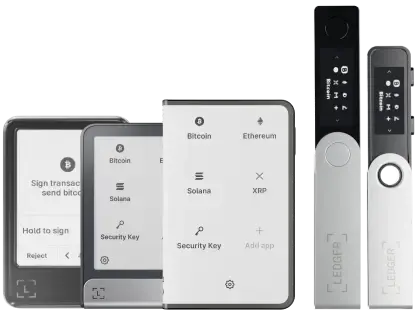
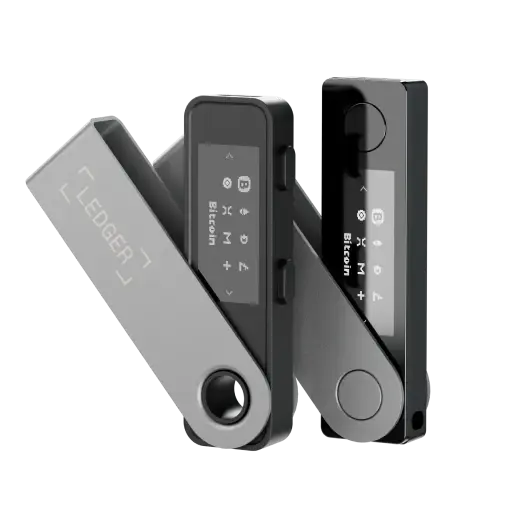
Meet Ledger Nano™ Gen5, the most playful signer yet

Discover now

Bitcoin Gold wallet

Discover the right crypto wallet for your Bitcoin Gold

Looking for a Bitcoin Gold wallet to buy, sell, swap, or grow your Bitcoin Gold? Join 8+ million happy customers who use Ledger to manage their crypto holdings every day.

  • Mobile & Desktop App
  • Secured by Hardware Wallet

Trusted by over 8 million customers

Bitcoin Gold wallet
Ledger Secured Solution

How to secure your Bitcoin Gold

Whether you’re looking to keep your crypto safe for long-term or manage them on a daily basis, Ledger has the right product for you.

Ledger hardware wallet

Protects your crypto wallets, keeping your private keys offline, far from hackers’ reach and resistant to online threats. Use it with the Ledger Wallet™ app for optimal freedom and control of your Bitcoin Gold.

Ledger Wallet™ App

Do more with your Bitcoin Gold, get timely insights, make informed choices, stake your assets… all in one place. Manage all your crypto wallets with clarity and confidence.

Quick, easy steps to get a Bitcoin Gold wallet

1
Buy a Ledger hardware wallet

Buy a Ledger hardware wallet

Choose the certified secure Ledger signer that best fits your lifestyle. All Ledger devices protect your private keys with the industry-leading Secure Element chip and constantly updated Ledger OS™.

Ledger touchscreen signers give you extra control with Clear Signing, Transaction Check, and a large display for greater everyday ease. Classic Ledger swivel signers give you the battle-tested security features you need to get started with self-custody.

Choose your hardware device

2
Download the Ledger Wallet™ app

Download the Ledger Wallet™ app

Enjoy the convenience of a desktop wallet or a mobile wallet, with the security of a hardware wallet. Use this all in one app to compare service providers and monitor prices across multiple chains. Buy crypto, swap, stake, and more.

Make informed decisions at just the right time to manage your Bitcoin Gold with ease and extra peace of mind.

3
Start your Bitcoin Gold journey securely

Start your Bitcoin Gold journey securely

Set up a Bitcoin Gold wallet account in a few seconds and manage it seamlessly via the Ledger Wallet™ app.

The best way to keep your Bitcoin Gold secure

Compare our wallets

Swap Bitcoin Gold, now ready to use

Manage your Bitcoin Gold

Manage your Bitcoin Gold

Ledger Wallet™ enables you to buy/sell, send/receive, swap and stake your crypto, all in one place, powered by popular third-party service providers.

Swap Bitcoin Gold

Swap Bitcoin Gold

Swapping enables you to explore different cryptocurrencies, protect your Bitcoin Gold from volatility, and diversify your portfolio.

Easily swap Bitcoin Gold via Ledger Wallet™ app, no fiat currencies required.

Swap Bitcoin Gold

What is Bitcoin Gold?

In 2017, Bitcoin Gold was established as a more user-friendly option to Bitcoin, aiming to combine the durability and security of the Bitcoin blockchain with greater flexibility for experimentation and development.

Unlike Bitcoin, BTG does not rely on Bitcoin hash power or compete for the “real Bitcoin” label, but instead seeks to expand the crypto space with a blockchain that remains closely compatible with Bitcoin while offering new opportunities for DeFi and DApp developers.

One of Bitcoin Gold’s main goals is to revolutionize the mining process on the Bitcoin blockchain by creating a more equitable system. By implementing changes to the Bitcoin blockchain through an alternate fork, BTG allows anyone to become a miner with basic hardware. This approach decentralizes mining and spreads it among a larger number of miners, instead of being controlled by a handful of large companies. To achieve this, Bitcoin Gold employs a PoW algorithm, Equihash-BTG, that cannot be run on specialized ASIC miners used for Bitcoin mining, giving ordinary users a fair chance to mine with common GPUs.

Chosen by 8,000,000+ customers

“Ledger = peace of mind. I'm sure some of us know that unsettling feeling when you know you need a Ledger but haven't quite organized yourself to get it sorted. If I did it all again, I'd start with having a Ledger.”

Janet Onagah @Janet_Oganah

"I got hacked in January and lost 1000s worth of NFTs. I felt disgusted, lost, and willing to quit. Until my friend told me he's ordering a Ledger. So, we bought the duo deal. Since then, I've been sleeping."

PrimeNic.eth @primenic_eth

“I use multiple Ledgers. Different colours = different uses.Public Wallet. Never touch long term storage. Day to day fund holdings. A back up just in case.”

winny.eth @winnyeth

"I have 3 Ledgers. Hot Wallet: minting/drawings etc. Main wallet: store most NFTs. Vault wallet: cold storage of crypto."

2160 @rekt2160

“I have 5 Ledger total. My personal NFT bag. 1 for testing. And 1 for each of my 3 daughters.”

Fanzo 🧢 11.11.22 @iSocialFanz

"If I could, I would name my Ledger Hagrid. Cause it's the keeper of my keys."

Petrica Butusina @PetricaButusina

"My Ledger is already called "Stew". As it is the steward who looks after my crypto & NFTs, so I can sleep at night."

Lkmland Crypto 💫 @LkmlandCrypto

"Ledger makes cold storage downright easy. My NFTs land infinitely safer and I don’t have to feel as paranoid about connecting to new smart contracts."

Matt Oney @MattOney93

Cryptocurrencies similar to Bitcoin Gold supported by Ledger crypto wallets

Bitcoin, Ethereum, USDT, Solana and more…

FAQ

Find answers to some of the most common questions.

Bitcoin Gold (BTG) is a fork of the Bitcoin protocol that executed in October 2017 and primarily originated out of a desire to change Bitcoin’s mining algorithm from SHA-256 to Equihash – consequently making ASIC mining rigs obsolete in the network.

Similar to the Bitcoin Cash hard fork, once the Bitcoin Gold fork was initiated, Bitcoin holders were able to redeem BTG at a 1:1 ratio corresponding to their BTC holdings.


Focused on a different design consideration than another of Bitcoin’s prominent debates — block size — the role of ASICs in cryptocurrency mining of proof-of-work (PoW) networks has been polarizing, and arguments on both sides are plausible. On one side, ASIC mining can lead to a centralized mining economy in the hands of firms that can operate with economies of scale since ASIC hardware costs are at a premium.

Conversely, the position taken by Bitcoin Gold and other ASIC-resistant cryptocurrencies is that by changing the mining algorithm to one that precludes ASIC machines from the network, access to mining can be democratized to any user with a GPU consumer computer.


Outside of the mining algorithm shift, Bitcoin Gold retains some of the same technical aspects of Bitcoin including the 21 million supply cap, SegWit, and block times. Bitcoin Gold’s Github cites the primary differences of the network from Bitcoin at the time of launch as:

  • ASIC-resistant Equihash mining algorithm
  • Per block difficulty adjustment algorithm
  • Replay protection
  • Unique wallet addresses

Bitcoin Gold was bootstrapped on November 12 following its launch to create its own network. However, it still contains the entire Bitcoin blockchain up to that point.

When you first buy cryptocurrency, you’re issued with two keys: public and private.

  • A public key serves as an address that can be shared with other parties to perform transactions.
  • A private key represents a randomly generated number that signs transactions and protects your assets from malicious attacks. If it gets compromised or lost, you won’t be able to access your cryptocurrency wallet to spend, withdraw, or transfer your coins.

To safeguard and keep track of your keys, you can use online or offline wallets. Online wallets, also known as hot wallets, store private keys on systems or devices that are connected to the internet. Hot wallets are easy and convenient to use, however, they come with several drawbacks. Besides being susceptible to attacks and a honeypot for hackers, with hot wallets, the custody of private keys is often entrusted to a third party such as a crypto exchange, which means you never have full control over your funds. The safer choice are specialized hardware wallets that store private keys offline. Stealing private keys from a hardware wallet would require physical access to the wallet and corresponding PIN or the recovery phrase. What’s more, with hardware wallet, you don’t need to rely on third party custodians.

Ledger Nano is the industry-leading hardware wallet. With more than five million customers, Ledger Nano wallets have several layers of security that protect private keys, and hence your assets:

  • Your private keys are stored on secure element chips.
  • A PIN code and a 24-word recovery phrase are required to access the wallet.
  • Ledger Nano crypto wallets have been built using highly durable materials for protection against physical damage.

With full isolation between private keys and your computer/mobile, Ledger Nano wallets keep your keys secure and give you complete control over your assets.

Bitcoin Gold (BTG) is a fork of the Bitcoin protocol that executed in October 2017 and primarily originated out of a desire to change Bitcoin’s mining algorithm from SHA-256 to Equihash – consequently making ASIC mining rigs obsolete in the network.

Similar to the Bitcoin Cash hard fork, once the Bitcoin Gold fork was initiated, Bitcoin holders were able to redeem BTG at a 1:1 ratio corresponding to their BTC holdings.


Focused on a different design consideration than another of Bitcoin’s prominent debates — block size — the role of ASICs in cryptocurrency mining of proof-of-work (PoW) networks has been polarizing, and arguments on both sides are plausible. On one side, ASIC mining can lead to a centralized mining economy in the hands of firms that can operate with economies of scale since ASIC hardware costs are at a premium.

Conversely, the position taken by Bitcoin Gold and other ASIC-resistant cryptocurrencies is that by changing the mining algorithm to one that precludes ASIC machines from the network, access to mining can be democratized to any user with a GPU consumer computer.


Outside of the mining algorithm shift, Bitcoin Gold retains some of the same technical aspects of Bitcoin including the 21 million supply cap, SegWit, and block times. Bitcoin Gold’s Github cites the primary differences of the network from Bitcoin at the time of launch as:

  • ASIC-resistant Equihash mining algorithm
  • Per block difficulty adjustment algorithm
  • Replay protection
  • Unique wallet addresses

Bitcoin Gold was bootstrapped on November 12 following its launch to create its own network. However, it still contains the entire Bitcoin blockchain up to that point.

When you first buy cryptocurrency, you’re issued with two keys: public and private.

  • A public key serves as an address that can be shared with other parties to perform transactions.
  • A private key represents a randomly generated number that signs transactions and protects your assets from malicious attacks. If it gets compromised or lost, you won’t be able to access your cryptocurrency wallet to spend, withdraw, or transfer your coins.

To safeguard and keep track of your keys, you can use online or offline wallets. Online wallets, also known as hot wallets, store private keys on systems or devices that are connected to the internet. Hot wallets are easy and convenient to use, however, they come with several drawbacks. Besides being susceptible to attacks and a honeypot for hackers, with hot wallets, the custody of private keys is often entrusted to a third party such as a crypto exchange, which means you never have full control over your funds. The safer choice are specialized hardware wallets that store private keys offline. Stealing private keys from a hardware wallet would require physical access to the wallet and corresponding PIN or the recovery phrase. What’s more, with hardware wallet, you don’t need to rely on third party custodians.

Ledger Nano is the industry-leading hardware wallet. With more than five million customers, Ledger Nano wallets have several layers of security that protect private keys, and hence your assets:

  • Your private keys are stored on secure element chips.
  • A PIN code and a 24-word recovery phrase are required to access the wallet.
  • Ledger Nano crypto wallets have been built using highly durable materials for protection against physical damage.

With full isolation between private keys and your computer/mobile, Ledger Nano wallets keep your keys secure and give you complete control over your assets.

Related Resources

Stay in touch

Announcements can be found in our blog. Press contact:
[email protected]

Subscribe to our
newsletter

New coins supported, blog updates and exclusive offers directly in your inbox


Your email address will only be used to send you our newsletter, as well as updates and offers. You can unsubscribe at any time using the link included in the newsletter. Learn more about how we manage your data and your rights.