









Legislation | 07/01/2026
Poland and MiCA: What Crypto Holders Need to Understand Right Now
July 1st, 2026 marks the end of the grace period under MiCA, the EU's Markets in Crypto-Assets regulation. Every EU member state has implemented it into national law except for Poland. Given the unique situation for Polish crypto holders, it is worth understanding exactly what it means for the assets you hold.
Before You Dive In:
- Poland is the only EU member state that has not passed implementing legislation for MiCA, meaning Polish crypto platforms face a more complex path to compliance than those operating elsewhere in the EU.
- Whether an exchange is MiCA-licensed or not, assets held on that exchange are held by a third party on your behalf, which is how custodial models work by design.
- Self-custody, where you hold your own private keys and control your assets directly, is a different model of ownership entirely, and Poland’s unique regulatory moment provides a timely opportunity to understand the distinction.
The grace period for the EU’s Markets in Crypto-Assets regulation (MiCA) ends on July 1st, 2026. Every member state has passed the legislation into national law, with one exception – Poland.
Due to the lack of national legislation in the country, Polish crypto platforms face a different licensing path than platforms elsewhere in the EU. For anyone holding crypto on a Polish-registered exchange, it’s worth understanding the impact of this clearly.
Poland’s MiCA Situation Explained
MiCA requires every crypto-asset service provider operating in the European Union to hold a Crypto-Asset Service Provider (CASP) licence from an EU national regulator. Most EU member states have transposed MiCA into national law, allowing domestic platforms to apply for that licence at home. Poland, however, had its implementing legislation vetoed for the third time in June 2026, leaving it as the only EU member state without the national legal framework MiCA requires.
Without a domestic licensing route, Polish platforms wishing to legally serve Polish users under MiCA must instead obtain a CASP licence in another EU member state, and passport that licence back to operate in Poland. Though this creates a path for Polish platforms to achieve MiCA-compliance, it is more complex and takes longer than applying domestically.
Polish legislation is expected to follow, but no confirmed timeline is in place. For context on which exchanges hold CASP licences and where, the European Securities and Markets Authority (ESMA) maintains an interim MiCA register that is publicly accessible.
What This Means for Your Assets
Regardless of Poland’s legislative status, the fundamental mechanics of how crypto is held on an exchange remain the same.
When you hold assets on a centralized exchange, those assets are held by a third party on your behalf. The exchange controls the private keys, and you hold a claim on the assets, not the assets themselves. This is how custodial models work, and it applies whether the exchange holding your assets is MiCA-licensed or not.
If an exchange is required to wind down its EU operations, MiCA mandates an orderly process that includes a withdrawal window for users to recover their assets. The regulation is designed to protect users in exactly this scenario.
Self-custody is a distinct model. When you hold your own private keys, you hold control over the asset directly. There is no intermediary between you and the asset. No third party’s regulatory status, operational continuity, or business decision affects your access to it.
One important clarification: self-custody means direct ownership of the asset itself. It does not replicate the services a licensed exchange provides. Trading, fiat conversion, and other regulated activities still require a compliant service provider. Self-custody refers to direct ownership of an asset, but it does not replace those services, nor can it restore access to a specific platform’s services if that platform changes how it operates.
That being said, Poland’s regulatory situation does make this a natural moment to confirm that you are choosing the best model for you.
Understanding Self-Custody: How It Works
If you decide you want to hold your own private keys and are considering the Ledger ecosystem, the process has three key steps.
Step 1: Choose a signer (hardware wallet)
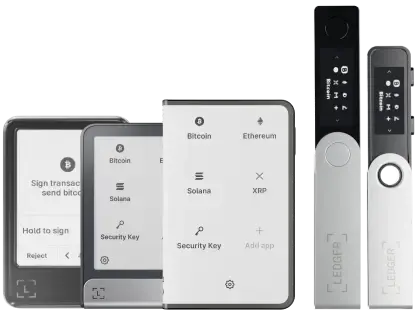
A hardware wallet is a physical device built to keep your private keys offline. Ledger produces a range of hardware wallets, categorized as signers, which allow you to create and store your private keys in an offline secure element chip. They are called signers because they enable you to sign transactions and verify your intent rather than just storing value passively.
This hardware wallet comparison page shows you the current range, from Ledger’s touchscreen signers for daily use to our classic Ledger Nano™ signers. Each runs on the same security architecture.
Step 2: Set it up with Ledger Wallet™
Ledger Wallet™ is the all-in-one companion app that pairs with your Ledger signer. It gives you a single interface to manage your assets, check balances, and initiate transactions. Your signer handles the signing; Ledger Wallet™ handles the interface.
Step 3: Move your assets from your exchange
Once your signer is set up and your wallet address is generated, log in to your exchange and navigate to the withdrawal section for the asset you want to move. Paste your Ledger wallet address as the destination, double-check it matches exactly, and confirm the withdrawal. The transaction will be broadcast to the blockchain, and once confirmed, your assets will be accessible through your Ledger Wallet™, under your direct control.
The Ledger help center covers each step of the process in detail.
MiCA: A New Chapter for Crypto in Europe
Poland’s MiCA situation will resolve as national legislation catches up with the EU framework. In the meantime, understanding the difference between custodial and non-custodial asset ownership is useful for any crypto holder, in Poland or anywhere else in Europe.
If you want to explore what holding your own keys looks like in practice, the Ledger Nano™ range is a straightforward place to start.
Shop Ledger Signers
FAQs
Has Poland Implemented MiCA?
No. Poland is the only EU member state that has not passed implementing legislation for MiCA. The country’s crypto regulation bill was vetoed for the third time in June 2026. Polish platforms seeking to operate under MiCA must obtain a CASP licence in another EU member state and passport it back to serve Polish users.
What Does MiCA Mean for Crypto Holders in Poland?
MiCA sets consistent rules for crypto-asset service providers across the EU, covering asset segregation, capital requirements, and consumer protection. For Polish holders, the practical effect is that exchanges serving them must now either hold a CASP licence obtained in another EU country or work toward obtaining one. The ESMA interim MiCA register allows you to check the licensing status of any provider.
What Happens to My Crypto if My Exchange Changes Its EU Operations?
MiCA requires any provider that cannot meet licensing requirements to wind down EU operations through an orderly process, including a withdrawal window for users to recover their assets. If your exchange communicates changes to its EU operations, follow its guidance and use the withdrawal window to move your assets if needed.
What Is the Difference Between Custodial and Non-Custodial Crypto Storage?
In a custodial model, a third party holds the private keys to your assets on your behalf. You hold a claim against that party rather than the assets directly. In a non-custodial model, you hold your own private keys.
Ledger signers are non-custodial devices: you generate and store your keys on the device, which they never leave. No third party’s operational status affects your access to the assets themselves, though services built on top, such as trading or staking, still require a compliant provider.
How Do I Move My Crypto From an Exchange to a Hardware Wallet?
Set up your Ledger signer and install Ledger Wallet™. Once your wallet address is generated, log in to your exchange, navigate to the withdrawal section for the asset you hold, and enter your Ledger wallet address as the destination. Confirm the transaction on your Ledger signer’s secure screen. Your assets will arrive under your direct control.
Check out the Ledger help center for a full step-by-step guide.