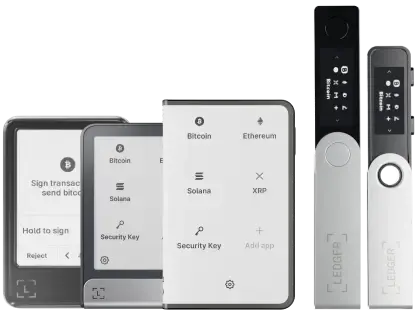

Meet Ledger Nano™ Gen5, the most playful signer yet

Discover now

Monero
XMR

$427.55

1.58%
Rank 28
Price $427.55 1.58%
Volume(24h) $263,048,187
Market cap $7,880,624,015

Monero PRICE USD CHART

Monero price today

The price of Monero (XMR) today is $427.55, which has a variation of 2.71% over the last 24 hours. The 24 Hour Trading Volume of Monero is $263,048,187

Monero Market Cap

The current Market Cap ranking of XMR is #28, with a live market cap of $7,880,624,015.

What is the Monero all time high?

Monero hit an all time high of $542.33.

With a price of $427.55 today, Monero (XMR) is -21.16% from all time high.

What is the Monero all time low?

Monero had an all time low of $0.216177.

With a price of $427.55 today, Monero (XMR) is 197,677.75% from all time low.

Frequently Asked Questions

Monero is a privacy-oriented cryptocurrency. It is a fork of Bytecoin and uses ring signatures, stealth addresses, confidential transactions, and bulletproofs to provide anonymous value transfer while maintaining privacy and fungibility.

Monero (XMR) is a cryptocurrency that operates on a blockchain with greater anonymity. It was one of the first cryptocurrencies to use encryption, which significantly improved privacy and fungibility over existing alternatives. Its primary distinction is its capacity to allow users to make and receive transactions while keeping this information private from anybody looking at the blockchain.

Monero, like other major cryptocurrencies, employs a proof-of-work algorithm to regulate XMR issuance and motivate miners to add blocks to the network. New blocks are added to the Monero blockchain every two minutes.

However, unlike other privacy-focused blockchains, it achieves privacy differently. It accomplishes this by hiding on-chain data, making it difficult to track Monero users. Here are some of its features that enable Monero to achieve privacy:

  • Ring Signatures – Monero employs Ring Signatures to mix the digital signature of the individual initiating an XMR transaction with other users’ signatures. Doing so makes the data appear as if any of the signers sent the transaction, thus making it difficult to track down a specific user.
  • Stealth Addresses – Stealth Addresses essentially work like one-time accounts created for different transactions. It allows users to publish one address that creates multiple one-time accounts for each transaction.
  • RingCT – Ring Confidential Transactions were added to Monero in 2017 and are used to hide the amount of funds exchanged by users in a particular transaction. RingCT effectively allows transactions to have several inputs and outputs while maintaining anonymity and preventing double-spending.

Monero’s beginning can be traced back to 2013 when developer Nicolas van Saberhagen released the CryptoNote white paper. This paper drew significant attention from the cryptography community, and soon the concepts mentioned in the paper were used to create a new cryptocurrency called “Bytecoin”. However, this project collapsed as the developers were alleged to have tampered with the total supply.

Monero is a derivative of Bytecoin, a 2012 privacy-oriented cryptocurrency. Developers dissatisfied with Bytecoin’s first distribution split the project into Bitmonero in 2014. The name was eventually changed to Monero by removing the “Bit” from the name.

Monero was created by a team of seven developers, five of whom chose to remain anonymous. There have been speculations that Satoshi Nakamoto, the creator of Bitcoin, also developed XMR. Hundreds of developers are believed to have contributed to XMR throughout the years.

Monero improved its privacy features in 2017 by integrating RingCT signatures, a technique developed by Bitcoin Core developer Greg Maxwell that hides transaction amounts and the address for each entry in the ring signature.

Monero developed bulletproofs in October 2018, a zero-knowledge proof mechanism that replaces Monero’s prior zero-knowledge range proofs for secret transactions.

Fluffypony (Riccardo Spagni), Monero’s lead developer responsible for maintaining the project, decided to step away in December 2019. He made this decision hoping to further decentralize the project by promoting contributions from different development teams.

Monero is different from other cryptocurrencies as there was no token sale for XMR, and no tokens were pre-mined. The total cap of XMR has been hard set at 18.4 million tokens, and it is expected that this will be reached in 2022.

Monero’s developers claim that privacy and security are their top concerns, with usability and efficiency following in second. Its goal is to give security and privacy to all users, regardless of their technological proficiency.

One of Monero’s critical ways of ensuring security is to avoid centralization, and the network employs the CryptoNight mining algorithm, which is based on proof-of-work. This keeps huge mining farms from dominating the market.

Furthermore, Monero’s roadmap includes regular hard forks. This allows the program to respond to changes and deliver security updates quickly. Some see “forced” protocol changes as a flaw; however, hard forks in Monero don’t have the same bad connotation as they have for other crypto projects.

Online theft and fraud are often conducted not by attacking the blockchain network but by targeting users’ online/hot wallets to expose their private keys. Such malicious actors trick users into revealing their private keys or attack their system with malware.

Hardware/cold wallets overcome this vulnerability by storing private keys in physical storage devices cut off from the web and, therefore, out of the reach of malicious actors.

Prominent cryptocurrencies like XMR are available on many centralized exchanges and decentralized exchanges (DEXs). CEX users compromise complete ownership over their crypto assets, as they do not have access to the private keys of the wallets holding their funds. Most CEXs also require KYC information these days, which is not ideal for people seeking privacy over their online activity.

DEXs are ideal for investors who prefer privacy and ownership over their assets. However, there are still some loose ends on the security front when online wallets are used, as they may expose their private keys resulting in thefts and frauds. 

The new and advanced hardware/cold wallets offer a wide range of services and a one-stop solution for the security, storage, and management of tokens such as Monero (XMR). A hardware wallet can overcome the vulnerability and tackle security concerns of centralized exchange (CEX) and hot wallets. 

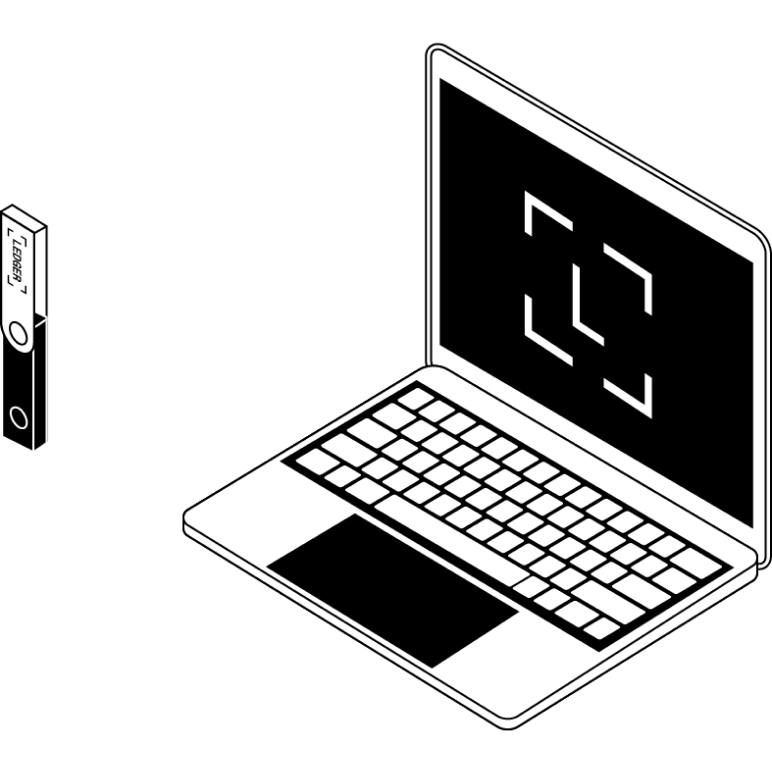
A Ledger hardware wallet saves your private keys offline and thus makes your crypto assets inaccessible for anyone except you in the event of a computer hack

The Ledger Live app gives the option to manage 1800+ coins and tokens from a smartphone or desktop, making the system extremely convenient. Follow the simple steps below to send/receive XMR on a Ledger wallet: 

  1. Get a Ledger Hardware Wallet.
  2. Download and set up Ledger Live on a web or mobile device.
  3. Create a designated Monero account after setting up Ledger Live.
  4. Install the Monero application from the app catalog.
  5. Start sending/receiving XMR using Ledger Live.

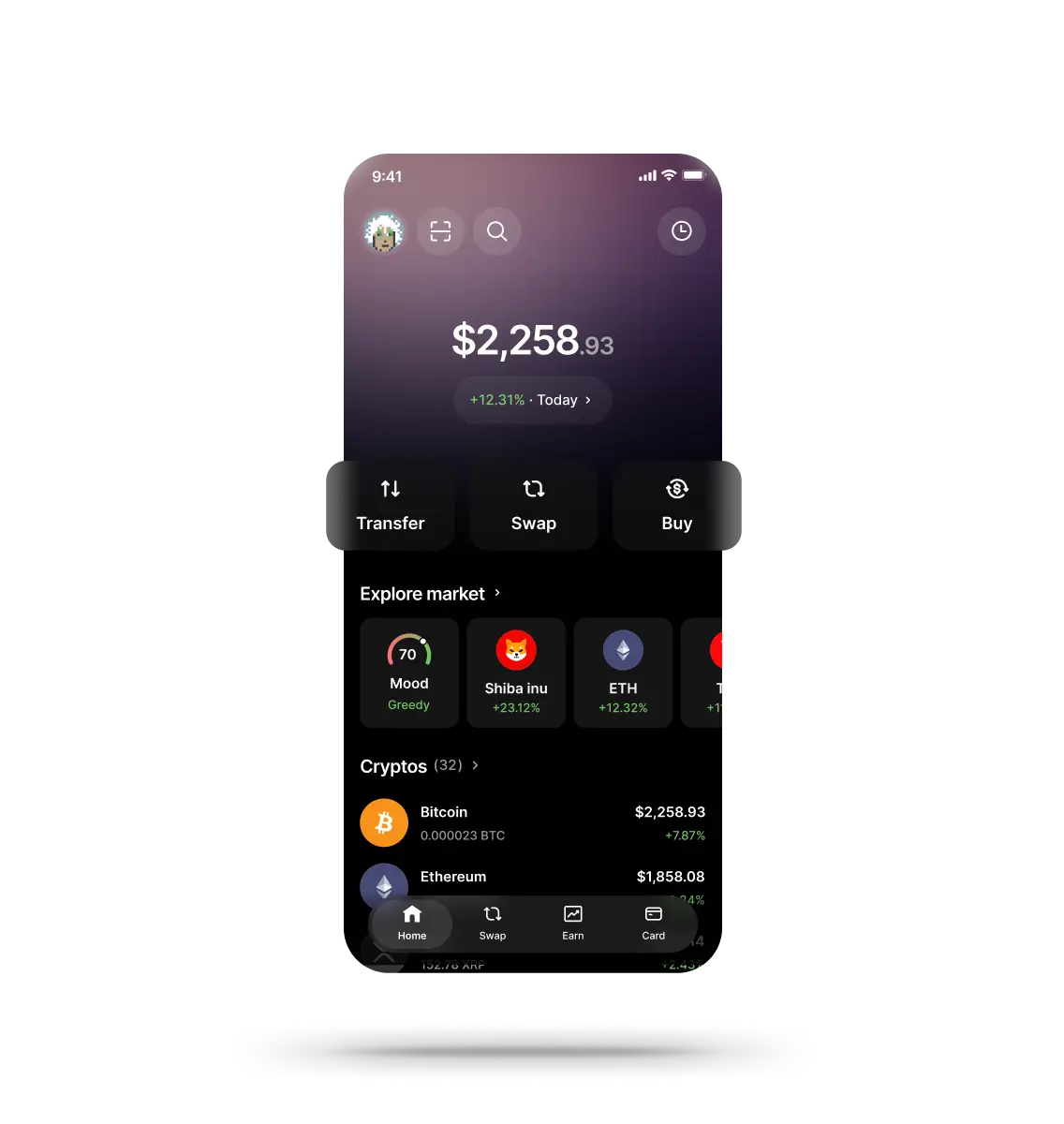
Ledger Wallet™
the all-in-one crypto app

Your assets. Your rules. Your future.

Available on Mobile & Desktop
Top up with ease

Top up with ease

Choose how you want to fund your accounts: Buy, Sell, Send, Receive.

Connect to dApps

Connect to dApps

Confidently navigate the DeFi landscape from a single secure space.

Diversify your assets

Diversify your assets

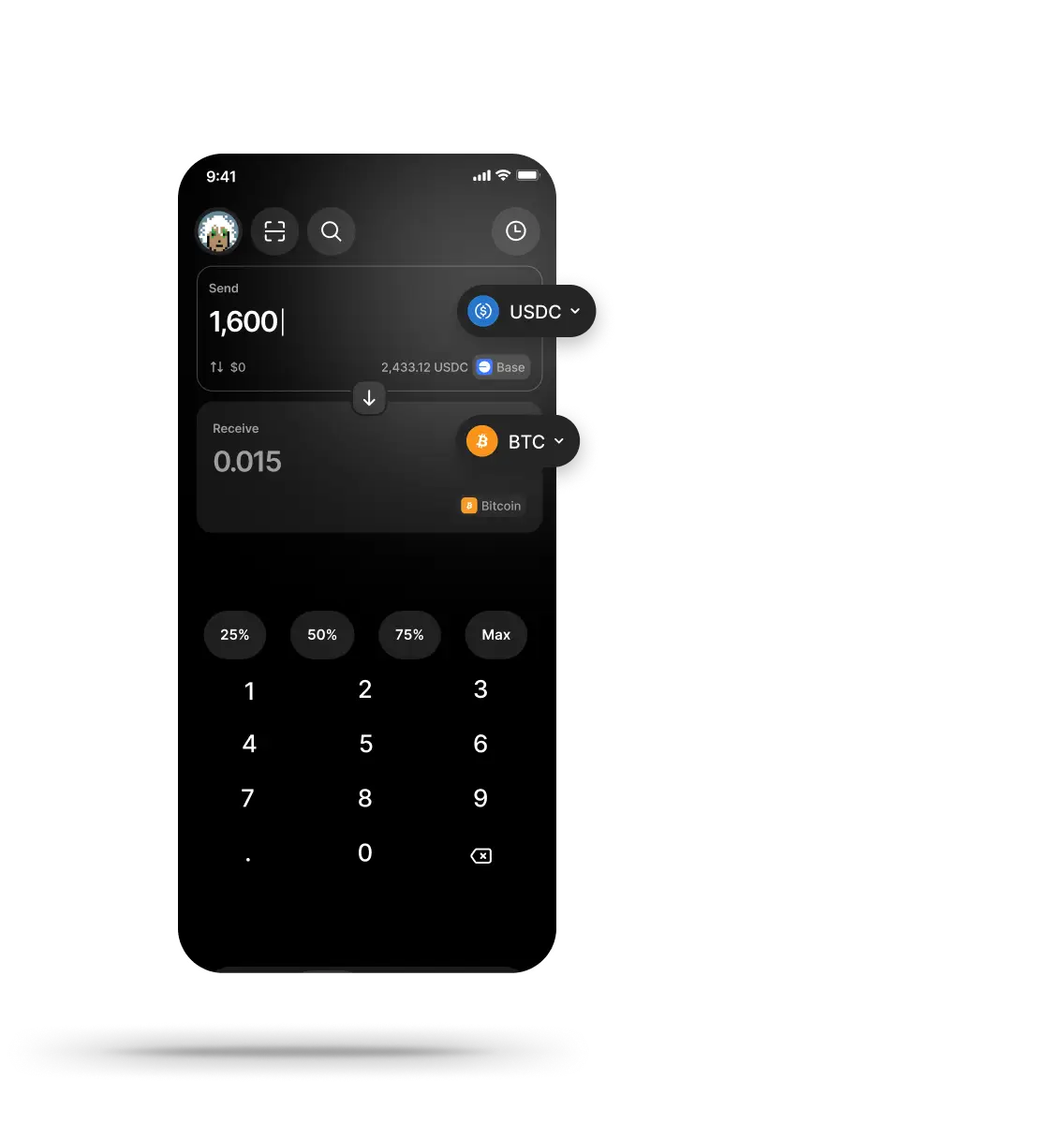
Swap securely across chains, CEX, DEX. Compare providers with clarity.

Grow your portfolio

Grow your portfolio

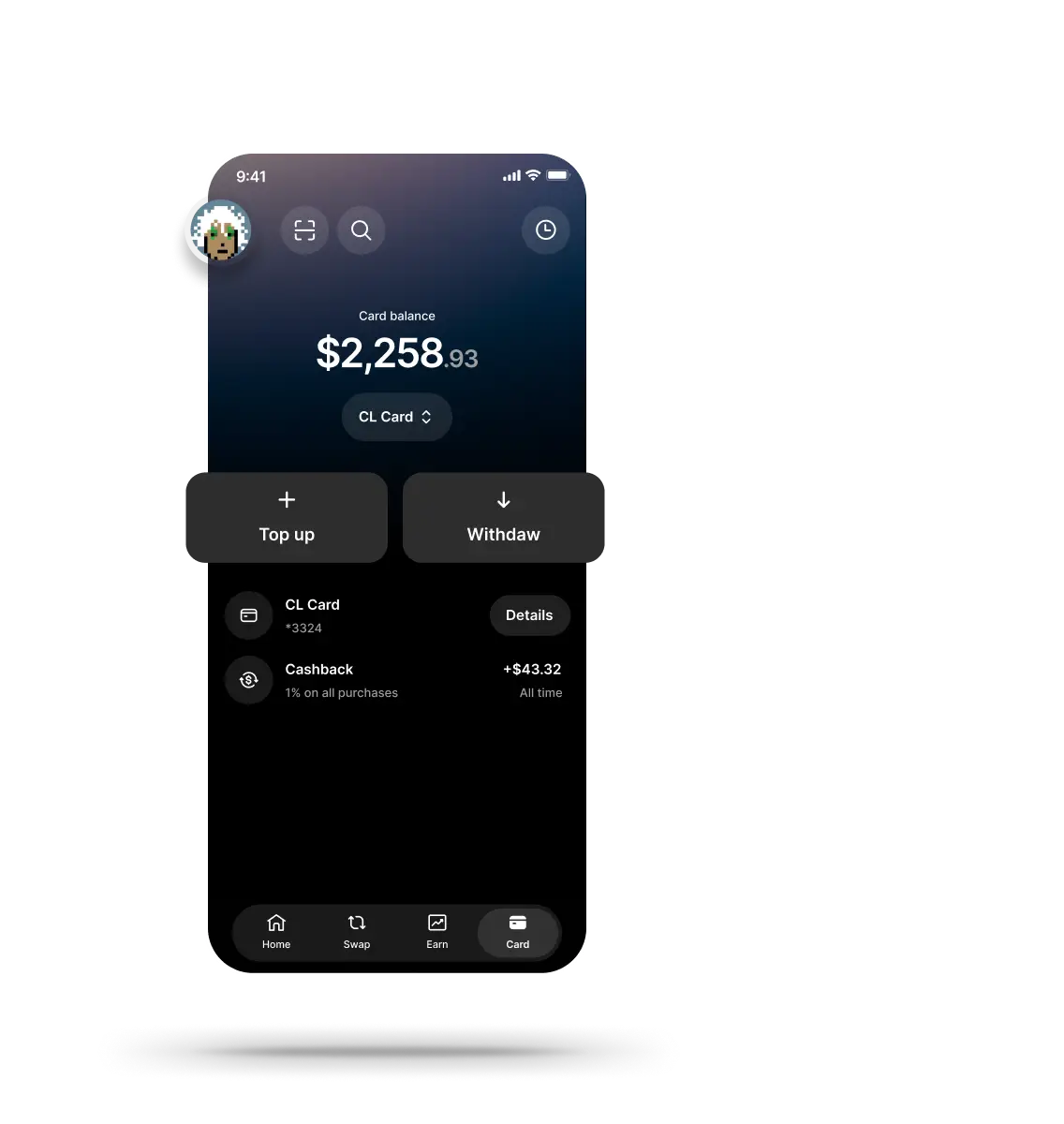
Put your crypto to work for you by staking. Earn cashback by shopping worldwide.

Ledger Wallet™ the all-in-one crypto app

Stay in touch

Announcements can be found in our blog. Press contact:
[email protected]

Subscribe to our
newsletter

New coins supported, blog updates and exclusive offers directly in your inbox


Your email address will only be used to send you our newsletter, as well as updates and offers. You can unsubscribe at any time using the link included in the newsletter. Learn more about how we manage your data and your rights.