









Enterprise | 10/23/2025
Beyond the Quorum: How Ledger Enterprise Multisig Prevents Sophisticated Attacks
Find out how Ledger Enterprise Multisig not only provides a defence against malicious transaction threats but can even proactively warn.
In the world of digital asset management, the multi-signature wallet is a pillar of security. Obtaining the approval of a majority of signers is, however, meaningless if the quorum can be deceived into blind signing malicious actions. So what’s the solution? Find out how Ledger Enterprise Multisig not only provides a defence against malicious transaction threats but can even proactively warn about potential threats.
The Dangers of Blind Signing
The core principle behind multi-signature wallets is the requirement of a quorum (majority) of approvals for any transaction, providing a powerful defense against the failure or compromise of a single key.
You’ll often see critical operations like signing digital asset transactions described in terms of M-of-N, where M is the minimum number of signers from the total possible signers (N). So, a simple multi-sig wallet set-up might require two out of three designated signers to approve a transaction.
Protocols like Safe have become the bedrock for organizations managing billions of dollars. However, the on-chain security of the M-of-N logic is only half the story. A quorum is meaningless if the signers themselves can be deceived into approving malicious actions.
Sophisticated attackers know this, and their new battleground is not breaking the smart contract, but exploiting the gap between human intent and on-chain reality. This security vulnerability is created by blind signing, and it is the most critical threat in the multisig ecosystem today.
The standard Safe web client provides a functional interface, but it inherits the vulnerabilities of the environment it runs in—a web browser on a potentially compromised computer. When an operator cannot independently verify the true effect of a transaction on a secure device, they are placing their trust entirely in the pixels on their screen. The catastrophic $1.4 billion Bybit attack is a chilling case study of what happens when that trust is broken.
A Case Study in Deception: The Bybit Attack
The Bybit attack was not a failure of the Safe protocol’s on-chain logic, but a masterful exploitation of the trust placed in its web interface.
Through a compromised developer machine, attackers injected malicious JavaScript into the Safe{Wallet} UI. This code performed a “bait-and-switch” at the most critical moment:
- The Bait: A Bybit operator initiated what they believed to be a routine internal transfer. Their computer screen showed a normal transaction.
- The Switch: Before signing, the malicious code intercepted the transaction and replaced it with a hostile payload: a delegatecall to an attacker’s smart contract. This payload was designed to change the ownership of Bybit’s cold wallet.
- The Blind Approval: The operator was presented with a complex, non-human-readable transaction. As the forensic report notes, the lack of a human-readable format for the delegatecall data makes it easier for signers to make a mistake. Forced to trust the compromised interface, they approved the transaction, leading to a catastrophic loss.
Building the Shield: How Ledger Enterprise Multisig Mitigates this Threat
The Bybit attack highlights a class of vulnerabilities that Ledger Enterprise Multisig is specifically engineered to mitigate. Where the standard Safe front-end is vulnerable to UI manipulation, Ledger Enterprise Multisig establishes an independent and secure verification process.
1. Clear Signing: The Ultimate Source of Truth
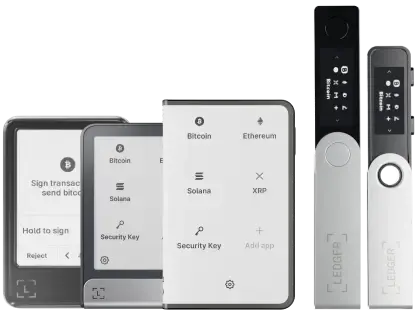
The core superiority of Ledger Enterprise Multisig lies in its ability to securely parse and display the true intent of a transaction on a Secure Screen, no matter what the web interface shows. Our cornerstone is Clear Signing, which turns the secure screen on a Ledger PSD (Personal Security Device) into a key point of verification.
In the Bybit scenario, the operator’s Ledger PSD could have bypassed the compromised UI and shown the real data, raising three unambiguous red flags:
- Operation: DELEGATECALL: The device would have explicitly stated that this was a delegatecall (Operation 1), not a standard CALL (Operation 0). For an operator expecting a simple transfer, this is a critical security alert.
- Malicious To: Address: The screen would have displayed the attacker’s unknown contract address as the destination, not a familiar internal wallet.
This process transforms the approval from a blind, trust-based action into a verifiable, knowledge-based decision. The chance of an attack is drastically reduced when the truth is revealed on a secure, isolated screen.
2. Proactive Threat Intelligence
Beyond Clear Signing, Ledger Enterprise Multisig provides a proactive security shield with Transaction Checks. Before the signing prompt, the attacker’s new and unverified smart contract would have been flagged, presenting a warning like “Critical threat detected” directly on the Ledger PSD. This provides an additional, early layer of defense that standard interfaces lack.
The Bybit attack was a watershed moment, proving that the greatest threat to on-chain treasuries isn’t always a direct assault on the smart contract, but a sophisticated deception of its authorized users. While the standard Safe web client offers a user-friendly way to interact with the protocol, it fundamentally relies on trusting the browser and the host computer—an environment proven to be vulnerable.
Ledger Enterprise Multisig provides the missing link: verifiability. It is the experience and security layer that brings world-class Clear Signing to existing Safe accounts.
Secure Screens – A Critical Source of Truth
By making the Ledger PSD’s secure screen a critical source of truth, we mitigate the possibility of UI-based deception and end the era of blind signing for good. This is the essential security upgrade that allows organizations to leverage the power of the Safe ecosystem without compromise.
To begin securing your organization’s assets using the clarity and confidence of Ledger Enterprise Multisig, visit our new website and connect your Ledger device today. Welcome to the future of on-chain treasury management.
Start now with Ledger Enterprise Multisig
Philippe Hébrard
Head of Product – Ledger Enterprise
SAFE{CORE}® and SAFE{WALLET}®, and the Safe logos are trademarks or registered trademarks of the Safe Ecosystem Foundation.