
Who Owns the Most Bitcoin? Top Holders, Whales & Institutions

| KEY TAKEAWAYS: |
| — Bitcoin represents decentralization, personal autonomy, and resistance to centralized control. — The distribution of Bitcoin holdings raises important questions about concentration and access. — Knowing who holds Bitcoin (BTC) – from individuals, to companies, and even governments, and how its supply works, helps you understand the dynamics of buying BTC vs true ownership. |
Bitcoin’s ownership landscape has changed significantly over time. The largest holders today are no longer limited to early adopters. Public companies, asset managers, and governments now hold substantial amounts of Bitcoin.
This matters because Bitcoin has a fixed supply of 21 million coins. As large entities accumulate Bitcoin, a greater share of that supply becomes concentrated.
However, blockchain data only shows wallet balances, not ownership. A wallet address may hold a large amount of Bitcoin, but control depends entirely on who holds the private keys. In many cases, especially with exchanges, the entity listed does not own the funds. The users do.
This guide explores the largest known holders and highlights a key distinction: the difference between having exposure to Bitcoin and having true control over it.
Lost Bitcoin and the Real Circulating Supply of BTC
Before looking at the largest holders, it’s important to understand that not all 21 million Bitcoin (BTC) are accessible. A meaningful share of the total supply is likely lost permanently, because the private keys required to move those coins no longer exist.
According to a 2020 Chainalysis report, between 3 and 4 million BTC are effectively lost. This estimate comes from several types of loss.
In Bitcoin’s early years, when the asset had little perceived value, many users did not treat it as something worth securing. Hard drives were discarded, laptops were lost, and wallets were forgotten. One widely known example is James Howells, a British IT worker who threw away a hard drive in 2013 containing 8,000 BTC. He has since spent years attempting to recover it from a landfill, without success.
There are also cases where wallet owners have passed away without sharing access credentials. Unlike a bank account, there is no customer support, no recovery process, and no legal mechanism to retrieve Bitcoin from a wallet if the private key is unknown.
Lost Bitcoin is permanently removed from circulation. This matters because the effective supply of accessible Bitcoin is lower than the 21 million cap. When looking at large holders, it’s important to remember that some of the coins counted as “held” may never move again.
Who Are the Largest Bitcoin Holders in 2026?
With that context in place, we can now look at the largest identifiable holders, moving from individuals to institutions and governments.
Individual Bitcoin (BTC) Whales
Bitcoin’s largest individual holders, often referred to as whales, include a mix of pseudonymous figures and early adopters who accumulated BTC when the asset was still widely misunderstood.
The Satoshi Nakamoto Mystery (The Ultimate Whale)
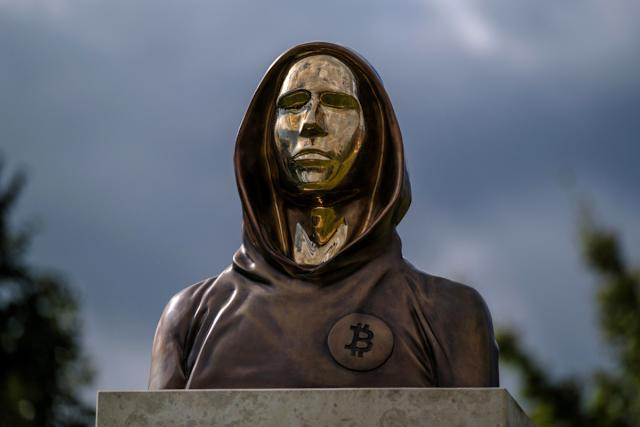
Satoshi Nakamoto, the pseudonymous creator of Bitcoin, is estimated to hold around 1.1 million BTC. These coins were mined in the network’s earliest days, before widespread participation.
What makes this holding unusual is not just its size, but its inactivity. None of these coins have moved since 2010.
Researchers identified Satoshi’s holdings through analysis of early block data, known as the “Patoshi pattern.” This refers to a distinct mining signature repeated across many early blocks. The pattern was first identified by researcher Sergio Lerner and later supported by peer-reviewed analysis.
So why have these coins never moved?
There is no definitive answer. It may be a deliberate choice, or it may be that the private keys are no longer accessible.
This raises a common question. If Satoshi holds such a large portion of Bitcoin’s supply, does that grant any control over the network?
It does not.
Bitcoin operates through decentralized consensus across thousands of independent nodes. Changes to the protocol require broad agreement. Holding Bitcoin, even in large amounts, does not provide authority over the network.
The creator and the system are separate.
The Winklevoss Twins

Cameron and Tyler Winklevoss are among the most prominent known individual Bitcoin holders after Satoshi, with an estimated 8,757 BTC.
They first acquired Bitcoin in 2013 using part of their Facebook settlement and have held it through multiple market cycles.
They later founded Gemini, a regulated U.S.-based exchange, and have remained consistent advocates for Bitcoin. Their long-term involvement contributed to broader awareness of Bitcoin among traditional financial audiences.
Tim Draper

Venture capitalist Tim Draper is one of Bitcoin’s earliest and most bullish institutional-quality individual holders. In 2014 he purchased nearly 30,000 BTC in a U.S. Marshals auction of coins seized from the Silk Road darknet market.
At the time the price was around $600 per coin. Draper’s bet; one of the most famous in crypto history, has multiplied many times over. In 2026 he remains an outspoken proponent, repeatedly forecasting Bitcoin at a high price point and calling 2026 “the year Bitcoin goes mainstream.”
2026 will be big. #Bitcoin goes mainstream. My $250k prediction finally reached. IPO window opens with a $trillion company. Space flight to the moon for passengers. Bio-Cures drive longer lives. Autonomous vehicles move us around the roads and in the air. Amazing! Awesome!…
— Tim Draper (@TimDraper) January 7, 2026
Michael Saylor (Personal Holdings)

Michael Saylor, executive chairman of Strategy Inc. (formerly MicroStrategy), personally holds ~17,732 BTC, a position he publicly disclosed in 2020 and has never sold since.
While his company now owns hundreds of thousands of BTC as a treasury asset, Saylor’s personal conviction that Bitcoin is superior to fiat as a store of value has been unwavering. He continues to champion corporate Bitcoin adoption and is widely credited with accelerating the shift from early investors to institutional balance sheets.
Public Companies and Institutional Bitcoin Holders
Institutional Bitcoin ownership is a recent development, and it has moved fast. The shift began in 2020 and accelerated sharply when U.S. regulators approved spot Bitcoin ETFs in January 2024.
Strategy Inc.

Strategy Inc. (formerly MicroStrategy) is the largest corporate holder of Bitcoin in the world, with 762,099 BTC as of March 2026.
The company, led by executive chairman Michael Saylor, began buying Bitcoin (BTC) from its cash reserves in August 2020, treating it as a long‑term store of value rather than a speculative trade. Strategy holds roughly 3.6% of all Bitcoin that will ever exist: a concentration with no precedent in corporate treasury management, and it continues to buy aggressively.
Tesla
Tesla, Inc., the electric-vehicle leader led by Elon Musk, was one of the first major public companies to put Bitcoin on its balance sheet. In February 2021 it purchased roughly $1.5 billion worth of Bitcoin. After selling a portion in 2022, Tesla has held steady at 11,509 BTC as of March 2026.
The move helped spark mainstream corporate interest in Bitcoin and remains one of the highest-profile examples of a Fortune 500 company embracing the asset.
In addition to companies holding Bitcoin directly on their balance sheets, institutions now also offer exposure through Bitcoin ETFs, a major new channel for traditional investors.
Marathon Digital Holdings

One of the largest Bitcoin mining companies in North America, Marathon Digital Holdings has grown into a major corporate holder with approximately 53,800 BTC as of March 2026. The company converts the Bitcoin it mines directly into its treasury rather than selling it for cash, betting that holding the asset long-term will deliver better returns than traditional energy or mining operations.
Metaplanet

Often called the “MicroStrategy of Japan,” Metaplanet has emerged as one of the most aggressive corporate Bitcoin buyers in Asia.
As of March 2026, the Tokyo-listed company holds around 35,100 BTC. Following a strategic pivot in 2024, Metaplanet adopted a Bitcoin-first treasury policy and has continued steady accumulation, drawing significant investor attention in Asian markets.
Bitcoin ETFs
An exchange-traded fund (ETF) is a financial product that tracks the price of an asset and trades on a stock exchange like a normal share. For Bitcoin, this means the ETF provider buys and securely custodies real Bitcoin, then issues shares that reflect the value of those holdings. Investors can buy ETF shares through their regular brokerage accounts without ever needing to manage wallets or private keys themselves.
- Grayscale Bitcoin Trust (GBTC): The oldest product in the space, GBTC was originally structured as a closed-end trust. When it converted to an ETF structure in 2024, it held approximately 466,000 BTC. Since then, sustained outflows have reduced its holdings to roughly 155,505 BTC as of 2026.
- BlackRock’s iShares Bitcoin Trust (IBIT): BlackRock’s IBIT launched in January 2024 and quickly became the dominant ETF by assets. As of March 2026, it is the single largest institutional Bitcoin holder on the planet, with approximately 785,308 BTC.
- Fidelity’s Wise Origin Bitcoin Fund (FBTC): Launched in early 2024, FBTC held approximately 186,837 BTC as of March 2026, down from its 2024 peak as net outflows across the broader ETF space reduced holdings.
The Bitcoin in these products belongs to the investors, not the ETF providers. BlackRock and Grayscale are custodians, not owners. They hold coins on behalf of millions of shareholders who chose exposure through traditional financial rails rather than direct custody.
Other notable institutional holders include Tether (the issuer of the USDT stablecoin), which held over 82,000 BTC by late 2024 as part of its reserve strategy, and Block.one, the private company behind the EOS blockchain, reportedly holding 140,000 BTC.
Governments with Large BTC Holdings
Governments don’t acquire Bitcoin the way institutions do. In most cases, the coins were seized; taken from criminals, dark markets, or hackers, and ended up on government balance sheets almost by accident.
United States
The U.S. holds approximately 328,000 BTC, making it the largest government holder by a significant margin. The bulk of these coins trace back to two sources: the Silk Road seizure, the dark market shut down by the FBI in 2013, whose founder Ross Ulbricht had accumulated hundreds of thousands of Bitcoin, and the Bitfinex hack recovery, in which federal agents in 2022 recovered approximately 94,000 BTC stolen in a 2016 exchange breach.
In March 2025, President Trump signed an executive order establishing a U.S. Strategic Bitcoin Reserve, formalizing the government’s intent to hold (rather than auction) these seized coins. No new purchases have been authorized under the order yet; the reserve is built entirely from seizures.
China
China’s government is estimated to hold approximately 190,000 BTC, though Beijing has never confirmed figures publicly, and reports indicate that portions of seized assets have been quietly liquidated over the past year. The largest known source remains the PlusToken seizure; a cryptocurrency Ponzi scheme dismantled by Chinese authorities in 2019–2020 that had accumulated billions in Bitcoin from retail investors across Asia.
Additional coins are believed to have been seized through enforcement actions against domestic exchanges and platforms following China’s sweeping crypto bans. Like the U.S., China’s holdings arrived through law enforcement rather than deliberate purchase.
Other Government Holders
Bhutan built its holdings through state‑backed hydroelectric mining since 2019, peaking at around 13,000 BTC in late 2024. Since then, it has been selling – its state investment arm, Druk Holding and Investments, has transferred over $42 million in Bitcoin in 2026 alone, bringing holdings below 5,400 BTC as of March 2026. The sales appear tied to funding Gelephu Mindfulness City, a planned special economic zone.
El Salvador, which adopted Bitcoin as legal tender in 2021 (later rescinding that status in 2025 under an IMF agreement), holds approximately 7,547 BTC as of early 2026. President Bukele has maintained a policy of buying one Bitcoin per day and made additional bulk purchases during market dips.
Why Your BTC Isn’t Safe on a Crypto Exchange
Most people believe that when they accumulate & “store” Bitcoin on an exchange, it works like a bank account; their coins sit safely in a personal Bitcoin wallet controlled by the platform. That’s the myth.
If you look at the largest Bitcoin wallet addresses on the blockchain, cryptocurrency exchanges dominate the top spots. Coinbase holds roughly over 800,000 BTC. Binance’s wallets hold approximately 643,000 BTC. Bitfinex holds over 400,000 BTC.
These numbers are real, but they are completely misleading. None of that Bitcoin belongs to the exchanges. It belongs to users who deposited their funds. Exchanges act as custodians, pooling millions of deposits into shared wallets. The large balances visible onchain are simply the combined holdings of their users.
This creates a gap between ownership and control. When you leave Bitcoin on an exchange, you do not control it. The platform controls the private keys. Your access depends on that platform continuing to operate as expected.
If the platform is hacked, becomes insolvent, freezes withdrawals, or is restricted by regulation, access to your Bitcoin can be limited or lost. This risk is not theoretical. Past events have shown how quickly access can disappear when users rely on third-party custody.
True ownership begins with self-custody. When you control the private keys, only you can authorize transactions. No third party can move your Bitcoin.
Ledger Signers: Unlock Secure Self‑Custody
Ledger signers are designed to help you take control of your private keys.
They store private keys in a Secure Element chip, isolated from internet-connected devices. This reduces exposure to remote attacks and keeps sensitive data protected.
Every transaction must be physically approved on the device. This ensures that only you can authorize actions. Clear Signing displays transaction details in a human-readable format. This allows you to verify exactly what you are approving before signing.
Ledger’s touchscreen signers, including Ledger Stax™, Ledger Flex™, and Ledger Nano™, provide an interface designed for clarity and ease of use. You can review transactions, navigate accounts, and interact with your assets directly on the device.
Ledger Wallet™ is the companion app that connects to your signer. It allows you to manage, buy, sell, swap, and stake digital assets while maintaining control of your private keys.
To help protect access over time, Ledger provides backup options such as Ledger Recovery Key and Ledger Recover. These solutions support recovery without compromising ownership.
Self-custody does not require sacrificing usability. With the right tools, you can maintain both security and control.
Conclusion
Bitcoin ownership is more layered than it first appears. The largest wallet addresses often belong to exchanges holding user funds, governments managing seized assets, and ETF providers acting as custodians for millions of investors who may never interact directly with the network.
This highlights a clear distinction. Exposure to Bitcoin is easy. You can gain it through an exchange or a financial product in seconds. Ownership is different.
Ownership means controlling your private keys and being the only party able to authorize transactions.
This rule applies to everyone, from individual holders to the largest institutions. Whether it is Satoshi, a public company, or an ETF provider, control defines ownership.
You do not need to be a large holder to apply the same principle. Secure self-custody ensures that only you can access and move your Bitcoin.
Frequently Asked Questions (FAQ)
Who is the richest Bitcoin owner?
Satoshi Nakamoto. The pseudonymous creator of Bitcoin is estimated to hold around 1.1 million BTC, identified through the Patoshi pattern analysis of early blockchain data. These coins have not moved since 2010, and Satoshi’s identity has never been confirmed. At current prices, the holding represents one of the largest individual wealth concentrations in the world, held entirely in an asset that its owner helped create.
How much Bitcoin does the US government own?
Approximately 328,000 BTC, formalized under the Strategic Bitcoin Reserve established by executive order in March 2025. All of it was acquired through seizures, primarily from the Silk Road dark market and the recovery of funds stolen in the 2016 Bitfinex hack. The U.S. government has not purchased Bitcoin directly and holds its reserve offline under Treasury oversight.
