
Ledger Signers Explained: The 10-Year Evolution

| KEY TAKEAWAYS: |
| — Ledger has been building cutting-edge devices for over a decade, always with security and self-custody. — Devices for protecting digital value have evolved since the inception of crypto, offering more security, ease of use and accessibility. — Ledger’s core mission has remained the same throughout its evolution: always prioritizing security while adapting to cutting-edge tech. |
In the past decade, Ledger’s mission has been the same: providing uncompromising security to the digital asset ecosystem. In a world where protecting your value is paramount, financial freedom is within reach, but it also comes with grave responsibility. Grappling with digital value means facing digital threats: some easier to combat than others. However, in the last 10 years, Ledger has sold over 8 million devices and currently secures multi-millions worth of crypto market share (around 20% of the world’s crypto).
The numbers speak for themselves, but you might be wondering how that’s all possible. Let’s dive into the history of Ledger signers and how they have evolved over time.
Ledger’s Inception: Maturing with the Crypto Industry since Day One
Ledger has always been an important part of crypto history, even at its very beginnings. But Ledger signers weren’t always the consumer-friendly, accessible devices everyone knows and loves today.
The first hardware solution Ledger ever created was the HW1, a simple chip for storing Bitcoin private keys offline. Simple but mighty (and only available from 2013 to 2016) the HW1 was offered in a time most people were unaware of what Bitcoin even was, a time where many of today’s users were still in school or college.
This humble piece of hardware was followed by the first ever Ledger Nano in late 2014, a USB style hardware wallet which also only supported Bitcoin. While these models lack some of usability benefits of the signers Ledger builds today, they were built on the first core part of Ledger’s security model: providing non-custodial, offline storage for your private keys, thus protecting your assets.
Why non-custodial offline storage was necessary
In August 2016, the Bitfinex exchange was hacked, with ~119,756 BTC (around 1 billion USD in today’s conversion terms) stolen. Leaving funds on exchanges was always a risk to digital value; a risk that has continued into the present. With the rampant rise of crypto frauds and scams that were to follow, it was clear the only path forward for anyone serious about crypto was via self custody. With self-custody, no one has access to your assets, removing the risk of centralized institutions like crypto exchanges mishandling or losing your funds.
The next key piece was finding a way for users to store those private keys effectively. Because while owning your own private keys keeps them safe from centralized risks, it doesn’t protect you from hacking. In this era, plenty of security-focused users would opt for self-custody, but they were typically opting for software wallets that were vulnerable to remote and online hacks. That’s why Ledger introduced these early methods of storing private keys offline and away from potential online threats, giving crypto OGs their first taste of secure ownership.
But as you well know, Ledger continued to grow alongside the crypto industry, offering even more security features the industry needed.
Launching the first hardware wallet with a Secure Element chip & Secure Screen
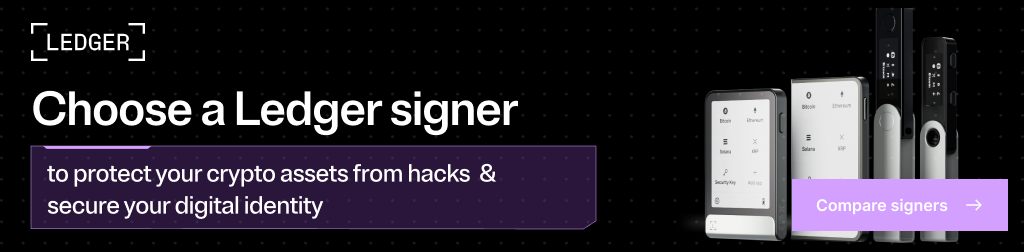
The real shift came in 2016 when Ledger launched the Ledger Nano S: the first device with an OLED screen and an integrated Secure Element chip. It shifted the tide so much it went on to become the highest selling crypto hardware wallet of all time.

Why adding a Secure Element & secure screen was so important
The reason the Ledger Nano S was so instrumental, is simple: it was the first time a crypto wallet had ever used a secure chip. Not only that, it also offered a screen directly driven by the Secure element chip.
To clarify, the Secure Element is the same kind of chip you have in your passport or bank card, and it’s tamper-resistant—protecting your assets from physical and remote hacking. And that’s exactly the kind of security Ledger has always believed your digital assets offer.
Aside from the improved user experience it offered, the Ledger Nano S also introduced a secure screen, representing a jump in security standards that became a key part of Ledger’s security model. Since the screen was driven directly by the secure element, you could trust the details it showed. This unlocked transaction security for the first time. By checking that the address on the device screen matched the one on their internet connected device, users finally had protection against blind signing, a threat that continues to plague crypto users into the modern age and a threat Ledger is still providing solutions to.
The next era for Ledger devices was about making crypto more accessible to everyone.
The Ledger Nano X & Ledger Live: Increasing usability and securing access to DeFi
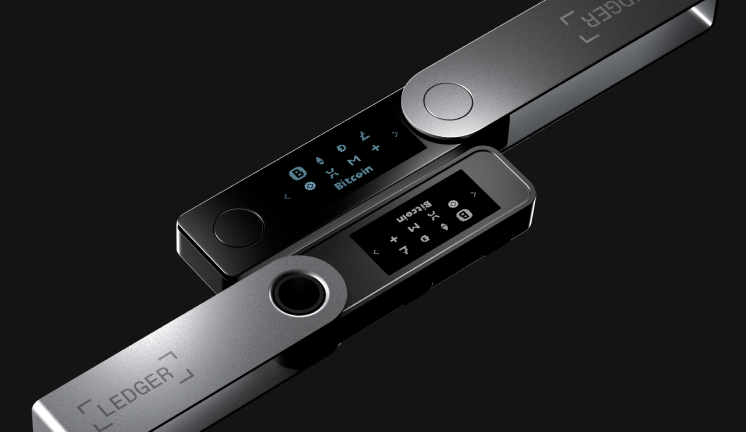
The launch of the Ledger Nano X 2019 introduced Bluetooth capabilities and iOS compatibility, making it the most accessible hardware wallet of its time. This is likely one of the reasons it went on to become an award-winning favorite. With these innovations in usability, without compromising security or self-custody, this was the start of Ledger’s journey in creating more user-friendly models for everyday crypto users.
Why connectivity and compatibility was important for DeFi
In 2019 DeFi was taking off. With the rise of decentralized exchanges and marketplaces, users needed a way to interact quickly, seamlessly, and of course, securely. Already aiming to combat this issue, Ledger Live was introduced in late 2018 to provide a secure gateway to DeFi apps and services, but providing a device to complement that shift was imperative.
While software wallets offering compatibility and connectivity with phones and DeFi platforms were becoming commonplace, they were leaving users vulnerable to online threats. These online threats were becoming more and more sophisticated, and with users signing transactions almost daily, the launch of the Ledger Nano X provided the single solution for interacting with these platforms and apps safely. Not only that, but it also provided compatibility with mobile devices through Ledger Live mobile apps and Bluetooth connectivity. Plus, it allowed users to secure up to 1100 different cryptocurrencies: an expansion that the growing DeFi industry was begging for.
The Ledger Nano S Plus: Introducing support for NFTs to further Crypto Culture and Digital Art
In 2022, Ledger launched the Ledger Nano S Plus, the first device to support NFTs, which also featured a larger screen and larger memory—adapting to the ever growing industry so users could secure even more assets.
Why supporting NFTs was important
In 2021 and 2022 the industry had gone NFT crazy. With the launch of some of the most well known collections today, such as ArtBlocks, Bored Ape Yacht Club, RTFKT, and the rise of innovation leveraging NFTs, such as the Ethereum Name Service (ENS) and POAPs, an increasing number of crypto users already owned and wanted to protect their NFTs. Ledger understood this shift in the market was huge, and wanted to support collectors and artists by providing them with the same security for their NFTs as it had already provided for coins and fungible tokens for almost 10 years. That’s why it launched the Ledger Nano S offering NFT compatibility. For the first time users were able to secure their NFTs with confidence!
Ledger Stax: The first Secure Touchscreen
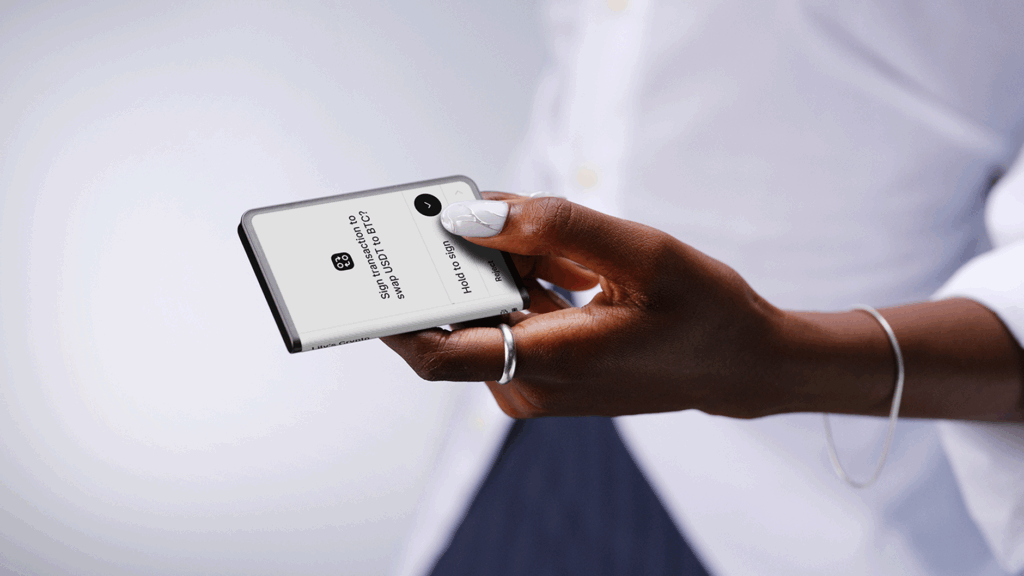
The next wave of hardware innovation came in 2023 with the launch of Ledger Stax, the first hardware wallet with a secure touchscreen. Collaborating with the Godfather of the iPod Tony Fadell, Ledger’s launch of Ledger Stax represented a new era: allowing users to interact with the blockchain securely, with the same ease of use they would expect from a smartphone.
And that wasn’t the only innovation Ledger Stax introduced; it also offered users the chance to customize their devices, personalizing their lock screens with their favorite NFTs or photos and naming the spine for easy recognition.
Apart from those key features, Ledger Stax was also the first stackable device, allowing users to connect multiple devices together with magnets for easy management when segregating their wallets for separate purposes. In short, it was the first device to work with a user’s lifestyle.
Why Secure Touchscreens & customizability was so important
Of course, Ledger Stax stayed true to the Ledger mission: providing this easy-to-use experience with the same security as ever; by driving the first-of-its-kind E Ink touchscreen with the Secure Element. This was unprecedented. Although other wallet providers had built touchscreen devices previously, they were vulnerable to hacking since their screens were driven by separate chips to the ones protecting private keys—leaving their screens vulnerable to spoofing and forcing users to sign transactions without full control.
The bigger, more user-friendly touchscreens incorporated into this next generation device also contributed towards a key Ledger mission: making blind signing a thing of the past. With a larger screen, it’s easier to see the transaction details, and since the touchscreens are secure, you can rest assured that what you see is what you sign.
With Ledger Stax, Ledger brought its unparalleled security model into the modern age, allowing anyone to secure their assets on a user-friendly, innovative and stylish device.
That said, clear and understandable transactions should be accessible to everyone. That’s why in 2024, Ledger launched Ledger Flex. Ledger Flex offered all of the core security benefits of Ledger Stax—plus some of the customizability—at a more attractive price point.
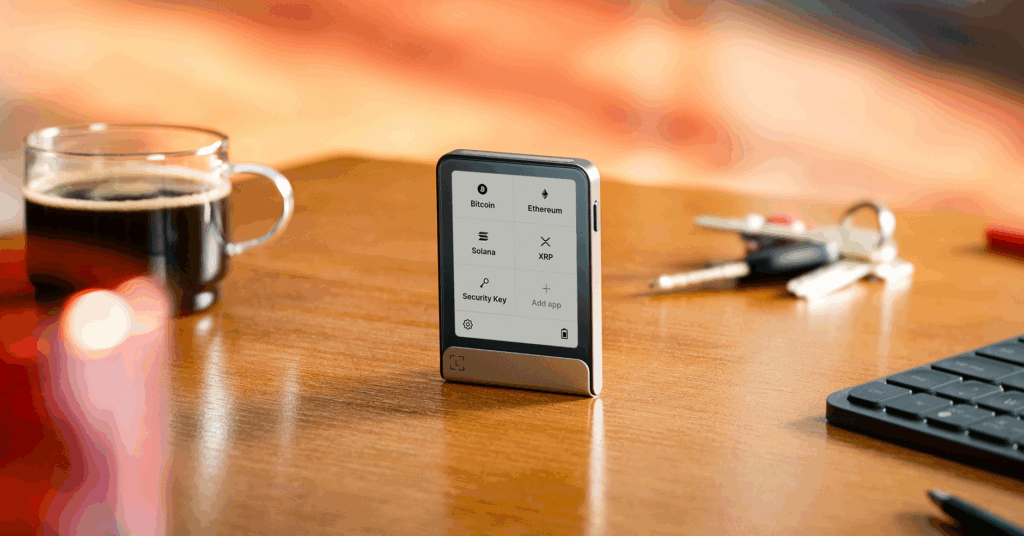
From this moment on, security became accessible to everyone.
Ledger Nano Gen 5 & the shift to Signers: Security beyond holding crypto
In 2025, Ledger launched the Ledger Nano Gen 5, representing the new standard for digital asset security. The Ledger Nano Gen 5 has everything the previous models of Ledger Nano offered while incorporating the key security features of Ledger’s next generation devices, Ledger Stax and Ledger Flex.
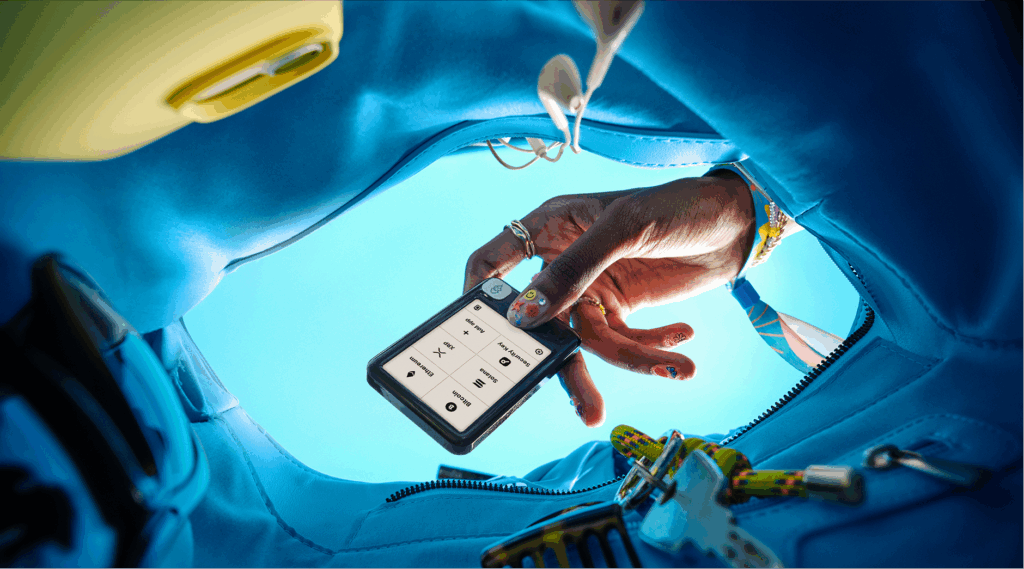
Why the shift from devices to signers?
At the same time as launching the Ledger Nano Gen 5, Ledger moved away from describing its devices as “hardware wallets”, opting instead for “signers” to more accurately describe their role. While some may think it arbitrary, the truth is that Ledger’s devices have evolved much further than simply storing private keys: they give you the power to secure your entire digital identity and serve as “Proof of You”.
In today’s landscape, your signer is the key to interacting with onchain apps and services, initiating and verifying blockchain transactions and providing much-needed security for your web2 apps too. For example, with the introduction of Ledger Security Key, your Ledger signer can also act as a Security Key, letting you sign into applications seamlessly.
Ledger’s signers today and into the future
When you get any Ledger signer today, you benefit from the same multi-layered security blueprint and seamless user experience.

- The secure Element chip: the certified security chip storing your precious private keys offline
- The secure screen: driven directly by the secure element ensuring what you see is what you sign
- Secure OS: a proprietary operating system running on the secure element that keeps your apps separate from one another
- PIN Code: ensuring that you and only you can access your signer with physical access
- Donjon testing: Ledger’s white-hat hacking team relentlessly tests the security of devices, rolling out firmware updates to keep your signer protected from current and future threats.
- Ledger wallet: the all-in-one app offering a secure gateway to crypto apps and services to buy, sell, swap and stake crypto.
These pieces work together seamlessly, offering you security and ease of use—no matter the device you use today.
