
How to Track Crypto Whale Movements?

| KEY TAKEAWAYS: |
| — A Crypto whale is a holder or institution that owns enough of a specific asset to impact its price should they decide to sell. — Since crypto whales tend to be expert traders, tracking them can offer a potentially lucrative trading strategy; simply copy-trade those already making profit to get the same results. — If you want to start tracking crypto whales, there are several possible methods, involving specific tools and copy-trading strategies. |
Bitcoin jumps 20% in a week, crypto twitter lights up with screenshots of massive gains, and you think “It should have been me”.
The people already celebrating? Usually big players like MicroStrategy, hedge funds, or even governments who started buying weeks earlier while the rest of us were still watching from the sidelines. The same thing happens in reverse: you hold through a painful drop, only to learn later that crypto whales had been quietly selling for days.
The real edge in crypto is timing, and the ones with the best timing are almost always the whales.
Good news: smart whales don’t slam the market all at once. They move slowly, over days or weeks, leaving clear tracks on the public blockchain for anyone to see—if you know where to look.
In this guide, we’ll explain exactly what a crypto whale is and how you can track their movements before the crowd catches on.
What is a Crypto Whale?
A crypto whale is any entity (individual, fund, company, or even government) holding enough of a cryptocurrency to impact its global price. The term borrows from casinos, where “whales” are high-rollers betting massive sums of money.
Crypto whales usually move their value using exchanges (centralized or decentralized) because they need enough trading volume to handle massive trades without suddenly spiking or tanking the price.
However, even on major exchanges, a wallet moving 1,000+ BTC can trigger market-wide price swings. For example, when the U.S. government moved ~10,000 BTC (~$600M at the time) from Silk Road seizure wallets to exchanges in 2023-2024, Bitcoin dipped 2-5%. Put simply, traders panicked, assuming the government would sell and thus decided to sell first.
What Does Whale Activity Mean?
Whales activity can reflect either routine safekeeping of funds, or buying or selling signals.
Crypto Whale Wallet-to-Wallet Transfers
Most crypto whale movements are routine safekeeping, including reorganizing their holdings across wallets. A single whale often controls thousands of addresses, so “unknown → unknown” transfers rarely bear significance to the wider market.
However, some whale wallet to wallet transfers could also reflect private deals between big players, companies shuffling treasury funds, investment rounds, or security firms moving crypto between vaults. The largest ones (like 20,000 BTC+) usually come from institutions, miners, early whales, or governments moving seized coins.
Accumulation (Buy Signal)
As mentioned, whales trade on exchanges for their deep order books that can absorb million‑dollar orders without suddenly pushing the price against them.
When big players move their crypto off exchanges, they’re locking down long-term positions. If a pattern emerges with multiple whales taking coins off exchanges, that’s your go-to sign that they’re holding through market noise and FOMO, and also shrinking the supply of the token for anyone to quick-sell.
Distribution (Sell Signal)
When coins flow back into exchanges, holders are typically moving their assets to somewhere they can sell quickly.
On an exchange, they can swap into stablecoins, cash out to fiat, or use those coins to settle large private “over‑the‑counter” (OTC) deals without blasting the whole order across the open market.
If these inflows build up steadily over days or weeks from bigger wallets, it often means large players are quietly getting into position to sell, not panic‑dumping in one go.
You do not always get a single dramatic “mega dump” candle at the top; many tops are just slow, controlled distribution, where whales offload to eager buyers while the market still looks healthy on the surface.
Why is it Important to Track Whale Activity in Crypto?
Ever surfed through crypto twitter and come across a post like this?
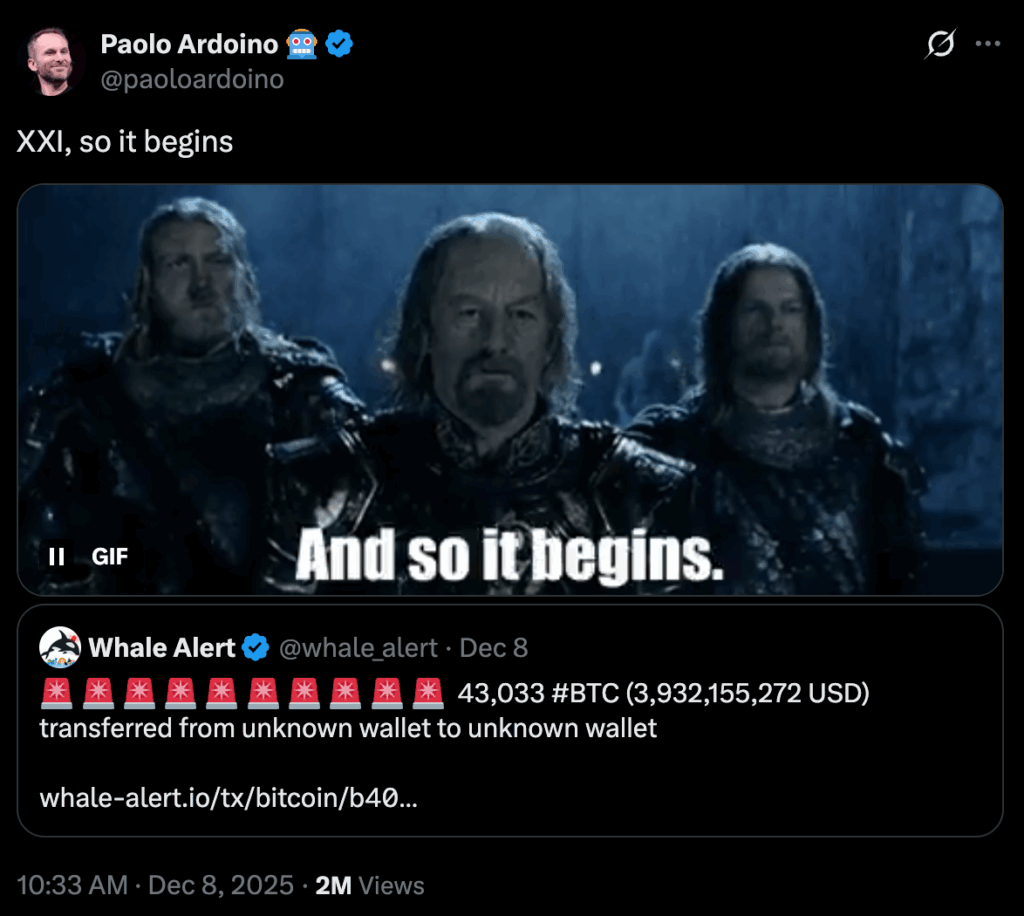
If you’re thinking to yourself, “Okay what’s this whale alert movement about? Are my bags safe?” – it might already be too late.
You might think 43,033 BTC (~$3.9B) moving in the holiday season in 2025 is unusual, but crypto whales use thin holiday liquidity to reposition quietly while everyone else is distracted. By the time the memes go viral, the move is already done.
That’s the difference between reacting to alerts and reading them. Tracking whales gives you all the alpha before retail catches on. While most traders panic at headlines, whale movements reveal where smart money is positioning ahead of narrative shifts, sector rotations, and liquidity events.
Monitoring these moves consistently, you learn to read the market’s underlying pressure points i.e. where supply is tightening, where distribution is building, and which assets serious money is rotating into (or out of).
So how do you actually track crypto whales?
Top Tools to Track Crypto Whale Activity
While there’s no single “best” whale tracker service, it’s good to know what features each tool offers and how they complement each other.
Whale Alert
Whale Alert is the most widely recognized real-time blockchain transaction tracker, monitoring major blockchains including Bitcoin, Ethereum, Ripple, and others for large-value transfers.
It’s like your first-response radar, instantly notifying you (via social channels or app) when significant amounts of crypto move between wallets or exchanges, often tagging known addresses..
Whale Alert’s strength is speed and accessibility: it surfaces the “what” and “where” of big moves within seconds, letting you decide which transactions deserve deeper investigation.
Top Features:
- Real-time tracking across 10+ major blockchains
- Labeled wallet addresses for exchanges, custodians, and known entities
- Multi-channel alerts (Twitter, Telegram, mobile app, Discord)
- Customizable thresholds for transaction size filtering
- Public API access for developers and bot integration
| Pros | Cons |
| Free tier covers most major chains | No wallet analytics or identity depth |
| Instant alerts across multiple platforms | Labels can be outdated or incomplete |
| Easy to set up, no technical knowledge needed | Shows “what moved” but not “why” |
| Large community following for context in replies | Single alerts = noise without broader pattern analysis |
Arkham Intelligence
Arkham Intelligence is a blockchain analytics platform that specializes in deanonymizing crypto wallets and turning raw transaction data into readable entity profiles.
Its proprietary AI system, “Ultra,” has indexed over 800 million labels across 450,000+ entity pages, tying wallet addresses to real-world identities—exchanges, funds, traders, institutions, and even crypto influencers.
This transforms a confusing “10,000 BTC moved from unknown wallet” alert into “10,000 BTC moved from Microstrategy’s treasury to Coinbase custody.”
The platform offers customizable dashboards, a Visualizer for transaction flows, a Tracer tool to follow funds across wallets chronologically, and an Alerter for instant notifications on specific wallet activity.
Arkham also introduced a crypto KOL (Key Opinion Leader) tagging system in 2025, tracking wallets of major crypto figures with 100K+ followers.
Top Features:
- Ultra AI engine with 800M+ wallet labels and entity identification
- Multi-chain wallet tracking (BTC, ETH, SOL, AVAX, TRON, and more)
- Tracer tool to follow fund flows chronologically across chains
- Entity pages showing portfolio holdings, transaction history, and balance changes
- Custom alerts for any wallet or entity activity
- KOL tracking for crypto influencers and notable figures
| Pros | Cons |
| Turns anonymous addresses into identifiable entities | Labels rely on AI and can occasionally be incomplete or wrong |
| Tracks 450K+ entities with deep transaction history | Steeper learning curve than simple alert tools |
| Multi-chain support for unified portfolio views | Free tier has limited dashboard customization |
| Custom alerting for specific wallets/entities | Doesn’t provide macro onchain metrics like Glassnode |
Nansen
Nansen is an AI-powered onchain analytics platform built around “smart money” tracking, i.e. identifying and following wallets with proven track records of profitability. Rather than analyzing raw transaction data, Nansen pre-categorizes entities by behavior (VCs, institutional funds, successful traders, whales) and tracks their portfolio moves, win rates, and realized profits in real time.
Instead of monitoring individual wallets manually, you can follow entire clusters of high-performing investors and see what tokens they’re accumulating, which DeFi protocols they’re entering, and when they’re rotating capital between sectors.
Nansen’s “Token God Mode” provides deep analytics on any asset, while its AI Signals feature automatically surfaces unusual onchain activity and emerging opportunities every hour.
Top Features:
- Smart Money tracking across 300M+ labeled wallets with performance metrics
- Multi-chain coverage (30+ chains including ETH, SOL, Arbitrum, Polygon)
- Custom alerts & AI Signals for real-time alerts on unusual market activity
- Token God Mode for deep token analytics and holder distribution
- NFT Paradise & DeFi dashboards tracking collections, liquidity, and protocol flows
- Exchange Flow insights showing capital movement in/out of CEXs
| Pros | Cons |
| Follows proven smart-money wallets with win rates and P&L | Premium pricing (higher cost than most competitors) |
| 30+ chain support for cross-chain portfolio tracking | Can be overwhelming for beginners due to feature depth |
| AI-powered signals identify emerging opportunities early | Free tier extremely limited (mostly requires paid subscription) |
| Deep NFT and DeFi analytics alongside traditional crypto | Focuses on smart money behavior, less macro cycle metrics |
Glassnode
Glassnode is an institutional-grade platform specializing in macro market cycle analysis, primarily for Bitcoin and Ethereum with expanding multi-chain support. Instead of tracking individual wallets, it aggregates behavior across entire cohorts (long-term holders vs. speculators, exchange balances, miner positions, etc.) to identify whether the market is in accumulation or distribution.
Top Features:
- 3,500+ onchain metrics including proprietary cycle indicators (SOPR, MVRV, NVT)
- Cohort analysis segmenting supply by holder age, wallet size, and behavior
- Exchange flow tracking showing net inflows/outflows and balance trends
- High-resolution data with updates as frequent as 10 minutes
- Custom dashboards and alerts for tracking specific metrics and thresholds
- Weekly research reports from leading onchain analysts
| Pros | Cons |
| Unmatched macro-level cycle and sentiment analysis | Steeper learning curve—metrics require interpretation |
| Deep historical data across multiple market cycles | Primarily BTC/ETH focused; newer chains have limited metrics |
| Proprietary indicators unavailable on other platforms | Free tier very limited; advanced metrics require paid plans |
| Weekly research contextualizes data for actionable insights | Doesn’t track individual wallets or smart money cohorts like Nansen |
Dune Analytics
Dune Analytics is a community-driven platform that lets anyone query and visualize onchain data using SQL across 100+ chains. Unlike platforms with pre-built metrics, Dune is a “build-your-own” layer where users write custom queries and create shareable dashboards.
Over 100,000 public dashboards covering whale tracking, DEX volumes, NFTs, and protocol health already exist—all forkable and customizable. This makes it ideal for tracking hyper-specific behaviors like a particular fund’s activity or stablecoin rotation on niche chains that generalized tools miss.
Top Features:
- 100+ chain support with unified SQL interface (most comprehensive coverage)
- Custom SQL queries to extract any onchain data without coding blockchain APIs
- Real-time data visualization with charts, graphs, and interactive dashboards
- Collaboration tools and API access for dashboard embedding and automated alerts.
| Pros | Cons |
| Most comprehensive multi-chain coverage (100+ chains) | Requires basic SQL knowledge for custom queries |
| Free to use with unlimited public dashboard access | Steeper learning curve for non-technical users |
| Massive community library saves research time | Data freshness depends on indexing speed (slight delays possible) |
| Infinitely customizable for niche whale tracking needs | Doesn’t label wallets or provide smart money cohorts like Nansen |
How to Track Crypto Whales
There’s no single “correct” way to track whales. Your approach depends on whether you’re reacting to moves as they happen or hunting for patterns before the market notices.
No matter which playbook you use, the pattern is the same: when whales move large amounts of crypto off exchanges to wallets, they’re buying/holding, and when they’re moving crypto to exchanges, they’re usually preparing to sell.
Here are the three methods to help you understand how you can set up for tracking crypto whale activity:
Method 1: Use Whale Alert Notifications
Catch breaking moves and immediate market reactions with this mix:
- Start with Whale Alert notifications
- When large transaction fires, open Arkham to identify the wallet
- Check Glassnode to see if this fits a broader exchange flow pattern (rising balances = sell pressure building)
- Cross-check Nansen to see if other smart money wallets are doing the same thing
Formula: Alert fires → identify entity → confirm trend → trade or ignore
Weakness: You’re always one step behind. By the time you’ve verified everything, price may have already moved.
Method 2: Follow A Few Proven Traders
Follow proven wallets before they make noise and step in early to smarter money moves:
- Start by bookmarking high-conviction wallets in Nansen or Arkham (VCs, funds, whales with strong track records)
- Set custom alerts on those specific entities
- When they accumulate, you get notified before Whale Alert spam hits Twitter
- Use Dune to track if this is part of a repeated pattern (e.g., “this fund has accumulated this token three times in the last month during dips”)
Formula: Identify winners → monitor their wallets → move when they move → ignore everything else
Weakness: You’re trusting past performance. Smart money can be wrong, or worse, they might be providing exit liquidity for even larger players.
Method 3: Filter for Insider Information
Understand cycle position before reacting to any single move:
- Start with Glassnode to understand where the market is in the cycle (accumulation? distribution? capitulation?)
- Use that context to filter Whale Alert notifications (ignore whale sells during obvious accumulation phases; pay attention during distribution)
- Confirm specific moves with Arkham only if they contradict macro trend
(e.g., one whale buying heavily while everyone else distributes = contrarian signal worth investigating)
Formula: Know the cycle → filter noise → investigate outliers → act on divergence
Weakness: Macro moves slowly. You might miss sharp reversals driven by a few large players front-running the herd.
How to Interpret Whale Activity: Crypto Transactions that Matter the Most
Let’s say you get notified about a big market movement like below:
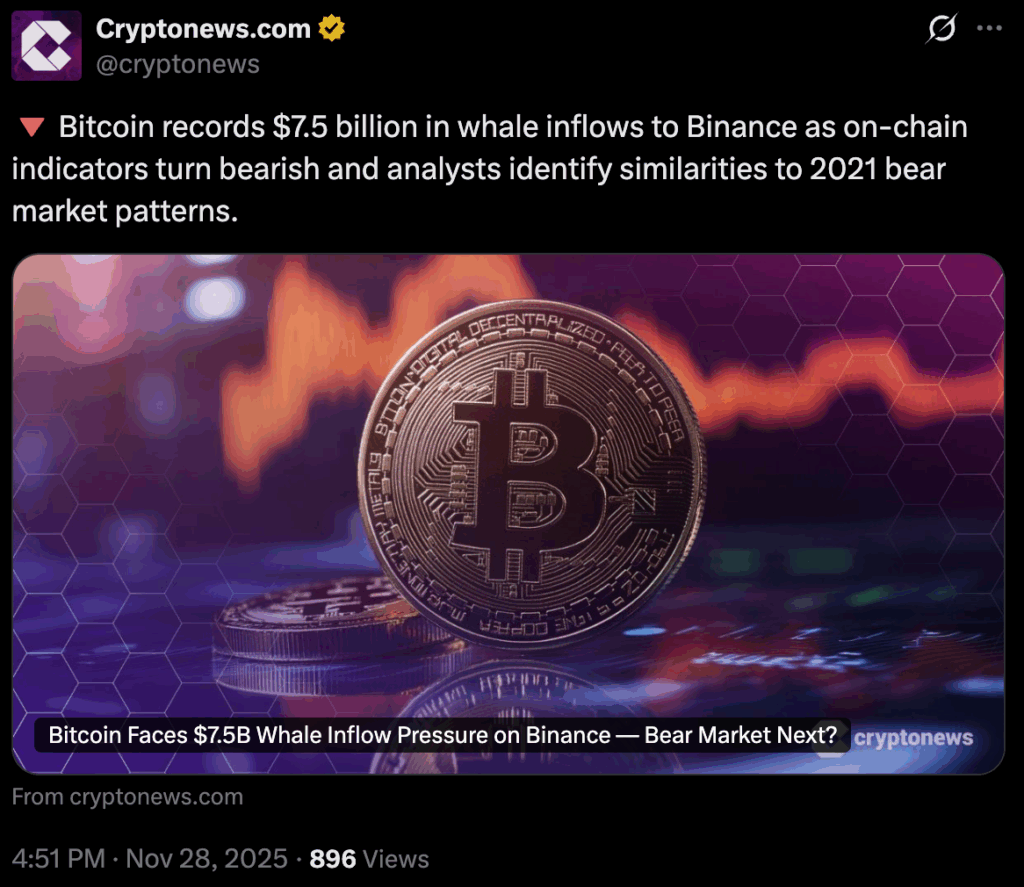
In late November and early December 2025, Crypto Twitter exploded with warnings: “$7.5 billion in whale inflows to Binance over 30 days: highest since March when Bitcoin crashed 30%.“
Most retail traders panicked and sold. But if you knew how to track whale behavior reactively, you would’ve read the situation completely differently. Let’s take a look at how, if you were applying the reactive tracking steps from playbook 1, this would play out in real time.
Reactive Tracking: How to Read This Signal
Step 1: Don’t Panic at Headlines
When you see alarming exchange inflow numbers, your first move isn’t to panic sell. Open Glassnode or Santiment and check what whale wallet balances are actually doing.
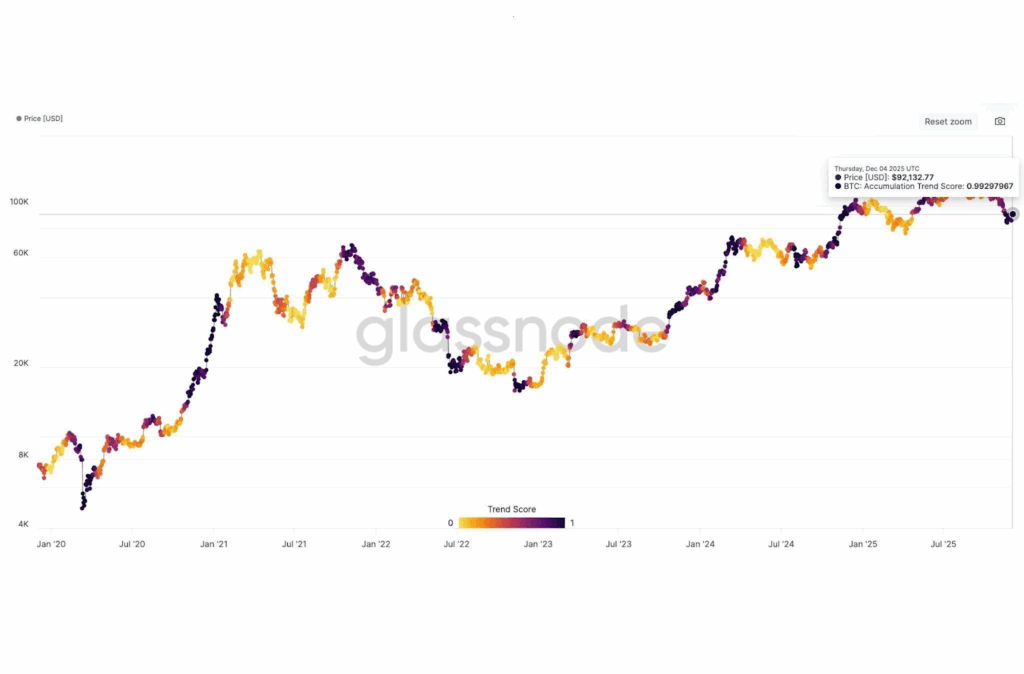
Source: Glassnode Studio
The chart above reveals the real story: Yes, $7.5B moved to exchanges, but Glassnode’s Accumulation Trend Score chart score hit 0.99 out of 1.0—one of the highest readings since the 2024 peak. This means whales weren’t distributing; they were aggressively accumulating. The purple clustering at $92,132 confirms smart money was buying the dip after the correction from $108K.
You can even cross-reference this information with AI tools, the chart below reflects the same:
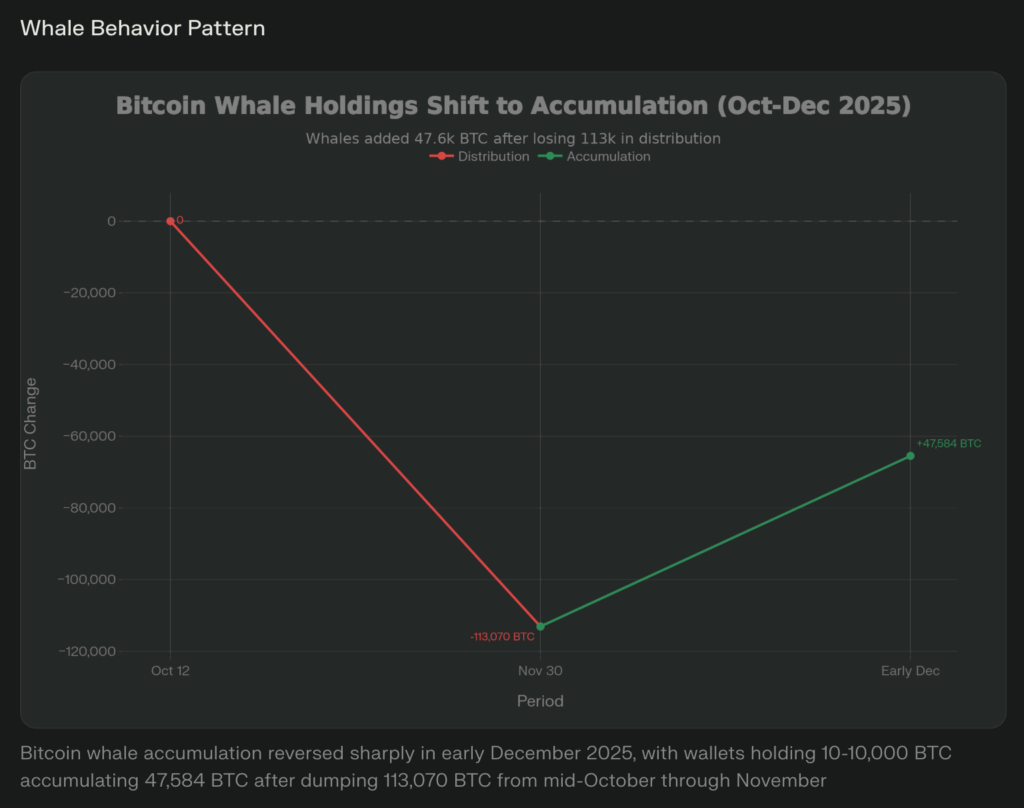
Source: Perplexity Finance
What this tells you: Exchange inflows aren’t sell pressure. Whales aren’t liquidating their positions. They’re repositioning.
Step 2: Compare Exchange Inflows to Historical Context
Now that you know whales are accumulating in cold storage, you need to understand why $7.5B is moving to exchanges.
Source: Perplexity Finance
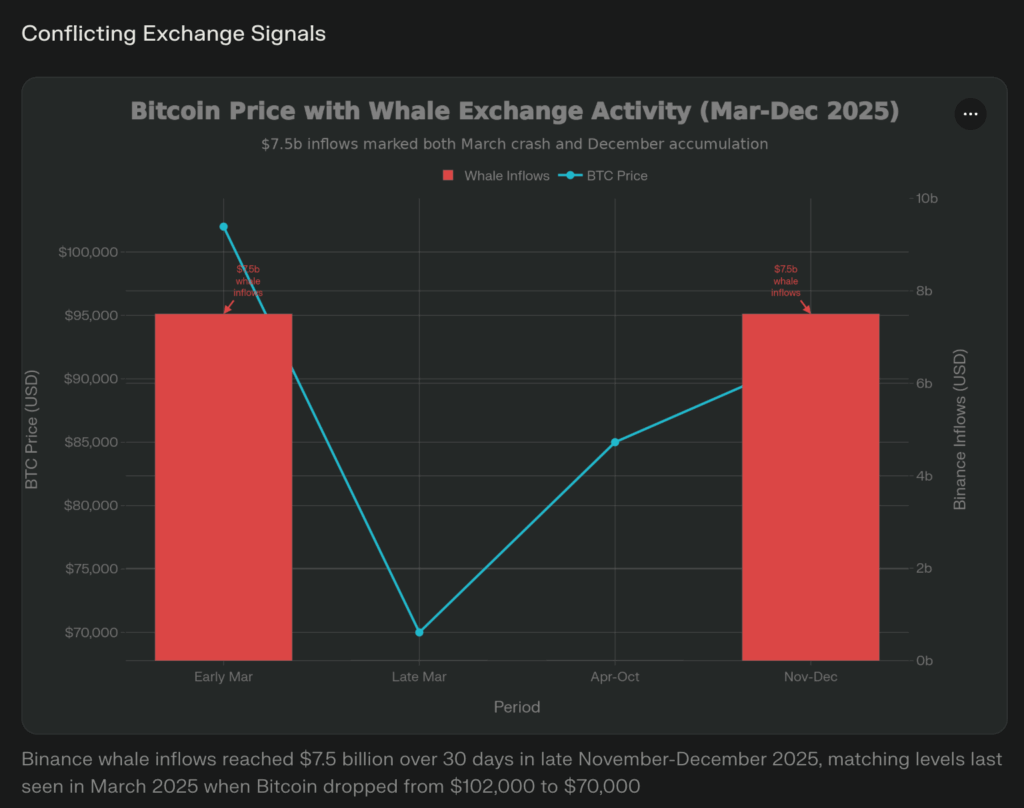
This chart shows two periods with identical $7.5B Binance whale inflows:
- March 2025: Inflows preceded Bitcoin crashing from $102,000 to $70,000 (30% drop)
- November-December 2025: Inflows coincided with Bitcoin stabilizing at $89,000-$94,000 (no crash)
Same dollar amount, completely different outcomes.
The March inflows to exchanges meant whales were actively selling to exit positions. The December inflows were likely OTC settlement, treasury rebalancing, or whales parking liquidity for trading, not panic selling.
Step 3: Validate with Market Cycle Position
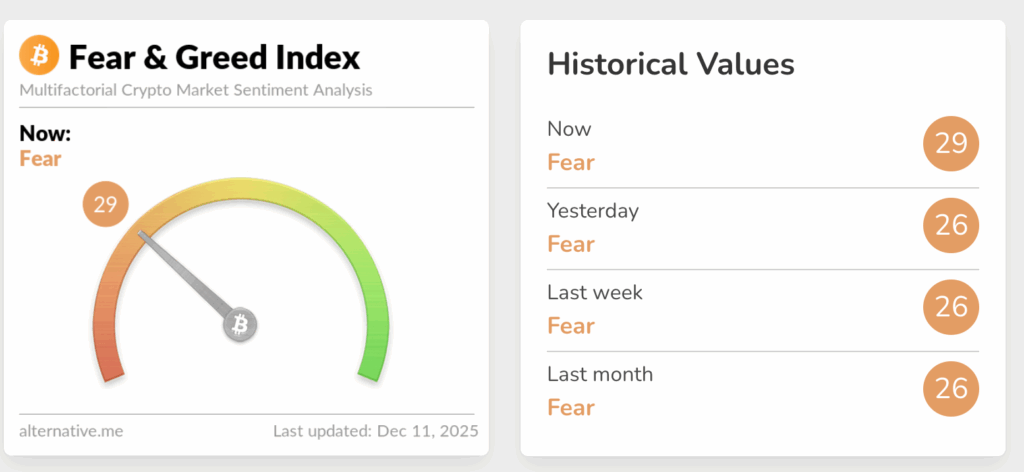
The final check: where are we in the market cycle?
- Bitcoin had corrected 15% from its December 2024 peak of $108,000
- Fear & Greed Index hit “extreme fear” (11-30/100)
- Mid-tier whale wallets (100-1,000 BTC) increased holdings by 0.47% in two weeks, adding 91 new whale entities
- Retail wallets under 0.1 BTC were capitulating and selling
Final result: Whales accumulating during extreme fear, while retail panics, is a textbook contrarian buy signal.
Best Practice Checklist: What to Know When Tracking Crypto Whales
- One Transaction Means Nothing: Single alerts are noise – you need at least three similar moves from different whales over multiple days to confirm a pattern.
- Context Determines Everything: Whale selling during extreme fear is usually capitulation (bullish); whale selling during euphoria is distribution (bearish)—the cycle position changes what the same move means.
- Watch What Whales Do, Not What Retail Says: The highest-conviction signals appear when whales accumulate during panic or distribute during FOMO, divergence between smart money and retail emotion is where the alpha lives.
- Accumulation Takes Weeks, Not Hours: Whales build positions slowly over weeks to avoid moving price, stop timing exact bottoms and look for sustained patterns instead.
- Use Crypto Twitter for Sentiment, Not Signals: Track whether retail is panicking or euphoric on CT, then compare it to what whales are actually doing in Glassnode or Nansen. When influencers call bottoms during accumulation or tops during distribution, they’re usually wrong, and that gap is your contrarian edge.
What are the Risks and Limitations of Whale Tracking?
Whale tracking isn’t foolproof.
The biggest risk is market manipulation, whales can create false signals through “spoofing” (placing large orders to trigger panic or FOMO), then canceling them to buy or sell at better prices. Delayed information is another limitation: by the time you spot a transaction, the market may have already reacted, making your response too late.
Overreliance on whale data is dangerous because whales have different risk tolerances and strategies than retail investors, following them blindly can lead to poor decisions. Additionally, interpreting onchain data correctly requires experience; not all large transactions are whales (some are exchanges or funds), and misreading wallet movements can lead to false conclusions.
Finally, whale tracking works best in trending markets but provides limited value during choppy, sideways price action where even large holders struggle to establish clear directional positioning. Use whale data as one input among many, not your sole decision-making tool.
Conclusion
Tracking crypto whales is about seeing where the market (and value) is headed before retail does. By the time whale alerts go viral on Twitter, smart money has already acted. When tracking crypto whales, context beats speed, patterns beat single alerts, and whale-retail divergence is where you get the best chance of making better investment decisions for your funds.
MicroStrategy, Tether, governments, and the biggest funds all use offline hardware to sign transactions, because while exchanges are convenient, they’re simply not safe.
For starters, you don’t own or even have access to any private keys, the exchange does. That means a hack, a government freeze, an insider scam, or simple bankruptcy (the likes of FTX, Mt. Gox, Luna, pick your nightmare) can wipe you out overnight, no matter how smart your entries were.
If you’re serious about protecting gains from smart crypto whale tracking, you need offline security for your private keys. When you hold your own private keys offline, nobody else can touch your funds. No counterparty risk, no surprise account locks, no middlemen – your coins are truly yours, and so is your financial destiny.
Ledger’s touchscreen hardware signers give you institutional-grade protection with a battle-tested security model that protects over 20% of global crypto value today.
With Ledger signers, you gain access to features like Clear Signing, showing you exactly what you’re approving on a tamper-proof secure screen. Other features like PIN protection, optional passphrases for secret wallets let you , and even the Security Key app guards your digital identity as a secure passkey across hundreds of websites.
Connect your signer to Ledger’s all in one crypto app Ledger Wallet™ and you can seamlessly buy, sell, swap, stake, and do more with your crypto.
Scared of losing your seed phrase? Ledger signers also offer easy backup and recovery options like a Ledger Recovery Key (included free with Ledger’s touchscreen signer range), and the optional, paid Ledger Recover service that recovers your access even in worst-case scenarios.
Trade like a whale and secure like one too. Why compromise? Invest in a Ledger signer today.
Frequently Asked Questions
1) How much BTC makes you a whale?
A: While there’s no specific BTC amount that can qualify you as a crypto whale, there is a threshold of upwards of ~500 – 1,000+ BTC that grants you whale status. This threshold is subjective, in reality, the exact threshold depends on liquidity depth, market cap, and supply concentration.
2) When are crypto whales more active?
A: Weekends and Asian night sessions are mostly quiet, automated bots dominate the low liquidity, creating fake signals that mimic whale activity. Real whale movement picks up on Monday mornings when institutions return to execute their strategies.
The London–New York overlap (13:00–16:00 UTC) is considered the primetime window since banks, OTC desks, and market-makers are all active to absorb million-dollar trades. Major events like CPI reports or Fed meetings create additional liquidity spikes that whales use as cover to hide their moves in the noise.
3) What is the best whale tracking app?
A: There is no single best whale tracking app, since crypto whale tracking can look different depending on your financial goals and strategies. Your best bet with whale tracking is to use a combination of tools (Whale Alert + Glassnodes, etc.) and craft yourself a tracking strategy that works.
4) How much crypto do whales own?
Gaining crypto whale status looks different for different tokens. There’s differences in market cap, liquidity, and supply concentration across popular blockchains.
| Asset | Whale Threshold (2025) | Approx. USD Value (at Dec 2025) | % of Total Supply Held by Top 100 Wallets |
| BTC | 500 – 1,000+ BTC | ~$92M+ ($92,369/BTC) | ~15–17 % |
| ETH | 5,000 – 10,000+ ETH | ~$33M+ ($3,318/ETH) | ~32–35 % |
| SOL | 100,000 –500,000+ SOL | ~$68M+ ($137/SOL) | ~40–45 % |
| BNB | 10,000–50,000+ BNB | ~$44M+ ($889/BNB) | ~55 % (Binance heavy concentration) |
| XRP | 1M-10M+ XRP | ~$20M+ ($2.08/XRP) | ~60 % (Ripple + escrow dominance) |
Keep in mind that these ranges are subjective and vary: someone holding just about any large sum of BTC can absolutely qualify as a whale in lower-liquidity conditions or specific market contexts.
